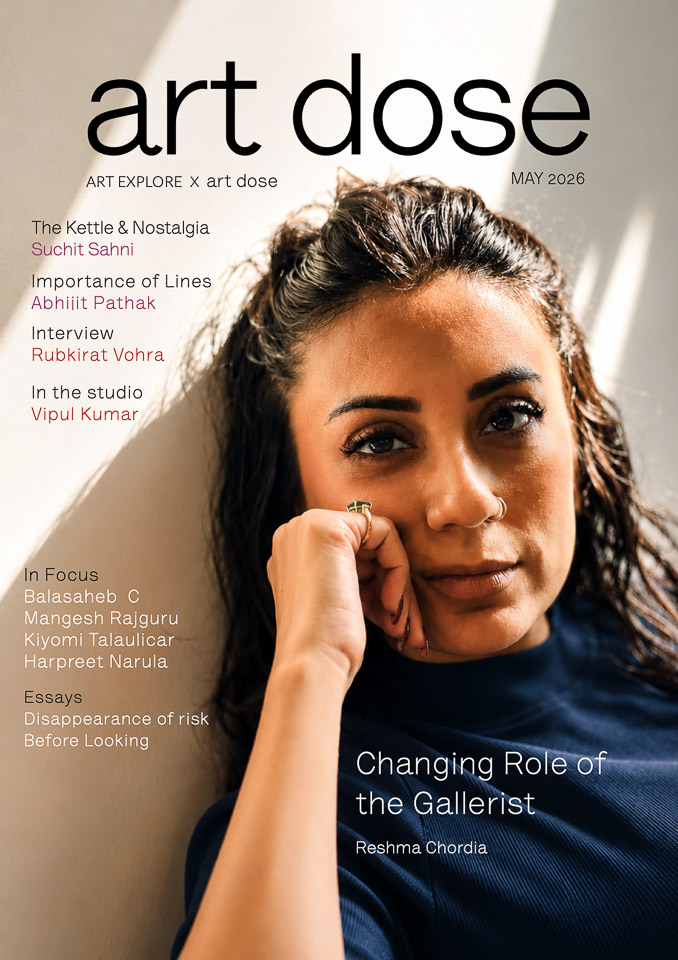
ART EXPLORE X art dose
The collaboration between art dose and ART EXPLORE brings together two distinct voices within the contemporary art space. This special edition moves between intimate artist conversations, critical writing, material studies and reflections on the shifting role of galleries and institutions. The collaboration acts as a living conversation around art, process, ambition, labour, and the realities of cultural production today.
Contents
-
Mangesh Rajguru and Satire
Works using humour, satire, texture, and layered imagery to reveal discomfort, contradiction, and the emotional tension of contemporary life.
-
In the studio
A glimpse into Vipul Kumar’s ceramic practice where labour, patience and repetition, shape the final sculptural form.
-
The Kettle
A reflection on memory, nostalgia, and the emotional lives carried quietly inside everyday objects. A review of artist Suchit Sahni’s metal sculpture The Kettle.
-
The Disappearance of Risk
Why contemporary art increasingly feels resolved before it feels honest.
-
Lines
For Abhijit Pathak, the line is a gesture, a structure, rhythm, and a direct emotional connection between thought and surface.
-
Harpreet Narula
Meditative abstractions built through repetition, rhythm, and disciplined mark making that balance stillness with emotional intensity.
-
Rubkirat Vohra
An intimate conversation on faith, architecture, fragility, memory, ambition, and the search for emotional truth through abstraction.
-
Balasaheb and Metal
Metal sculptures where polished brass and dark gunmetal surfaces become meditations on erosion, memory, permanence, and time.
-
Before Looking
An essay on how wall texts, institutional language, and over explanation are reshaping the way viewers encounter art.
-
Kiyomi Talaulicar
Quiet and introspective works exploring negative space, spontaneity, silence, and the layered complexity of emotional experience.
-
In an Age of Visibility
Reshma Chordia reflects on galleries, power, commerce, visibility, and the shifting realities of the contemporary art ecosystem.
-
Mangesh Rajguru and Satire
Works using humour, satire, texture, and layered imagery to reveal discomfort, contradiction, and the emotional tension of contemporary life.
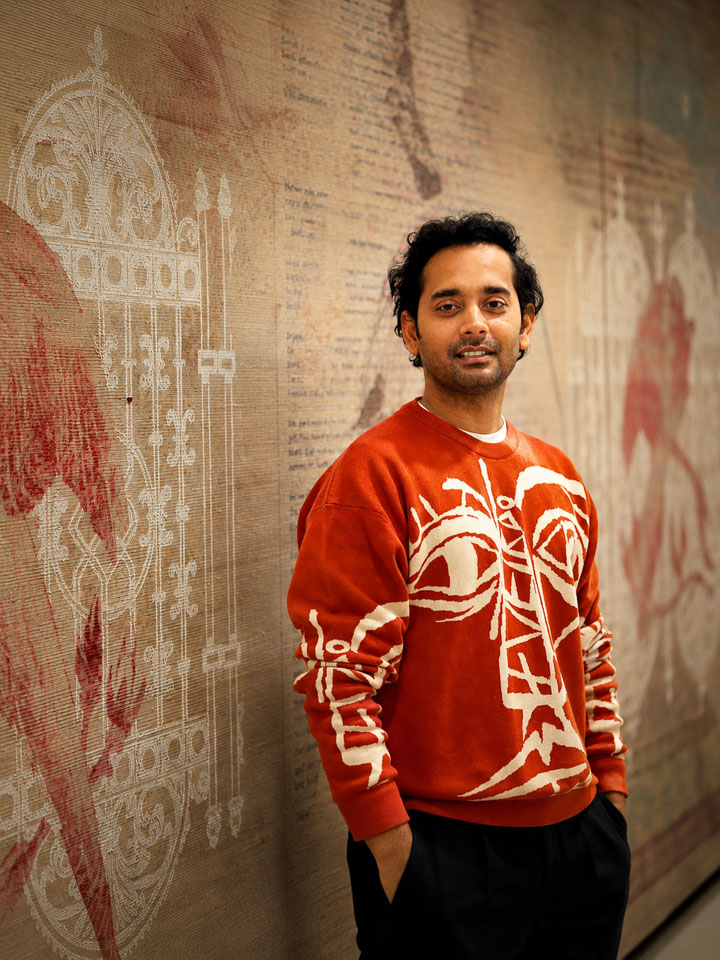
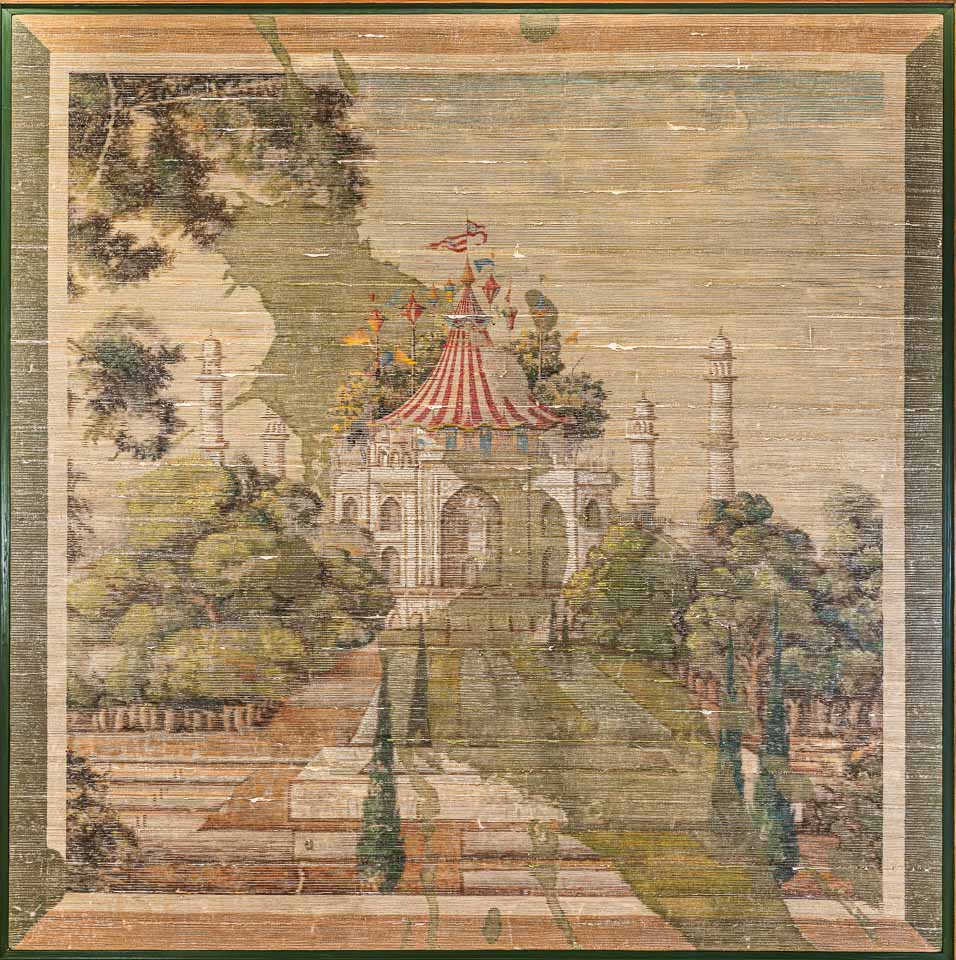
Mangesh Rajguru “My work uses humour, satire, texture, and colour as a way to pull the viewer closer before the deeper discomfort begins to surface. I am interested in tension, between history and the present, density and silence, attraction and unease. The images may appear playful at first, but underneath them sits observation, contradiction, and the weight of contemporary life.” — Mangesh Rajguru
-
In the studio
A glimpse into Vipul Kumar’s ceramic practice where labour, patience and repetition, shape the final sculptural form.
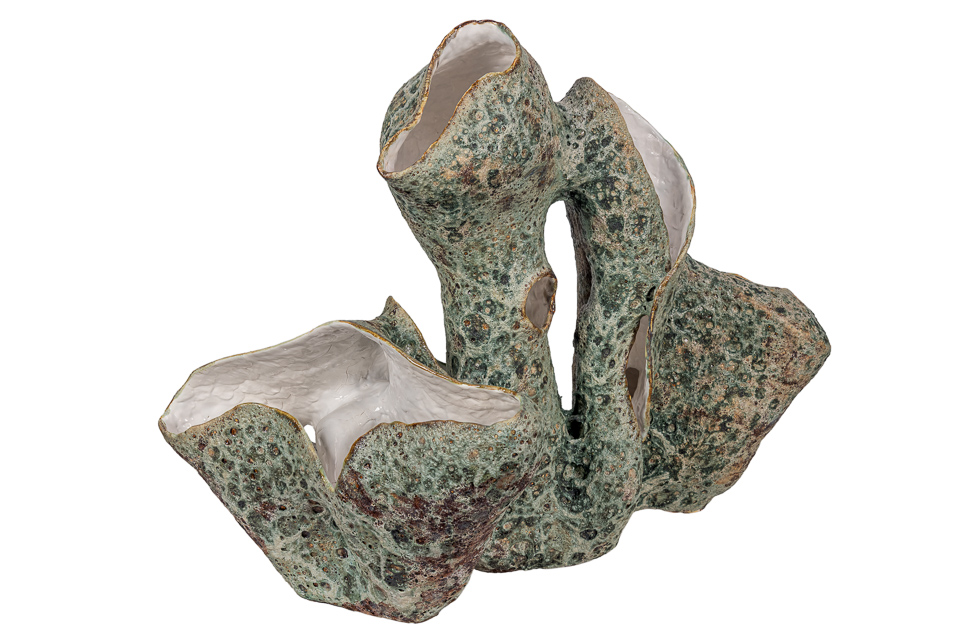
For ceramic sculptor Vipul Kumar, the studio is a place of patience and discipline. Clay demands complete attention. It records every gesture, every hesitation, every careless movement. Preparing for an upcoming solo show means long hours of building, carving, drying, firing, and sometimes watching works crack or fail entirely. Ceramic practice carries its own unpredictability, which makes dedication even more important. The work cannot be rushed. Time itself becomes part of the material.
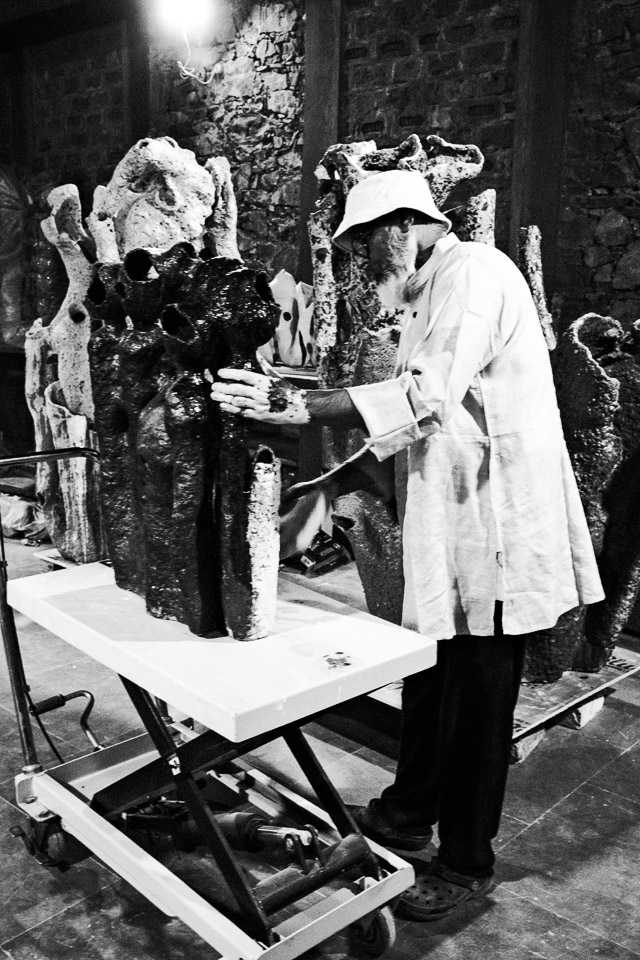
Vipul Kumar in the studio As the exhibition approaches, the studio turns into a space of intense focus. Each sculpture begins to carry the pressure of representation, of standing inside a gallery as part of a larger conversation. For Vipul Kumar, this period is about persistence and commitment to the process. The viewer may eventually see resolved ceramic forms under gallery lights, but behind them are weeks and months of labour, repetition, and quiet concentration. That honesty remains embedded in the surface of the work itself.
-
The Kettle
A reflection on memory, nostalgia, and the emotional lives carried quietly inside everyday objects. A review of artist Suchit Sahni’s metal sculpture The Kettle.
Nostalgia has become one of the most urgent subjects in contemporary art because modern life is forgetting itself too efficiently.
We document everything.
We retain very little.Photographs disappear into phones. Personal histories survive as invisible files stored somewhere in distant servers. Entire emotional lives are reduced to digital storage. Contemporary culture preserves data. It rarely preserves emotional truth.
Against this condition, artists working with physical memory carry unusual importance.
Suchit Sahni understands this with remarkable clarity.
His twelve inch metal kettle from the Nostalgia series does far more than recreate a domestic object. The sculpture restores emotional weight to something contemporary life would otherwise leave behind. A kettle like this once existed quietly inside countless urban Indian homes. It sat on kitchen stoves during monsoon afternoons, slow mornings and long conversations before life became accelerated beyond recognition.
That familiarity becomes the emotional entry point into the work.
The object feels deeply personal, yet almost collective in its memory. Most viewers recognise it instantly. Not because the form itself is extraordinary, but because objects like these absorbed ordinary life silently for decades. They witnessed exhaustion, celebration, financial anxiety, family rituals and intimacy without ever demanding attention.
Objects remember us more honestly than photographs do.
Photographs perform.
Objects endure.That distinction sits at the centre of Sahni’s practice.
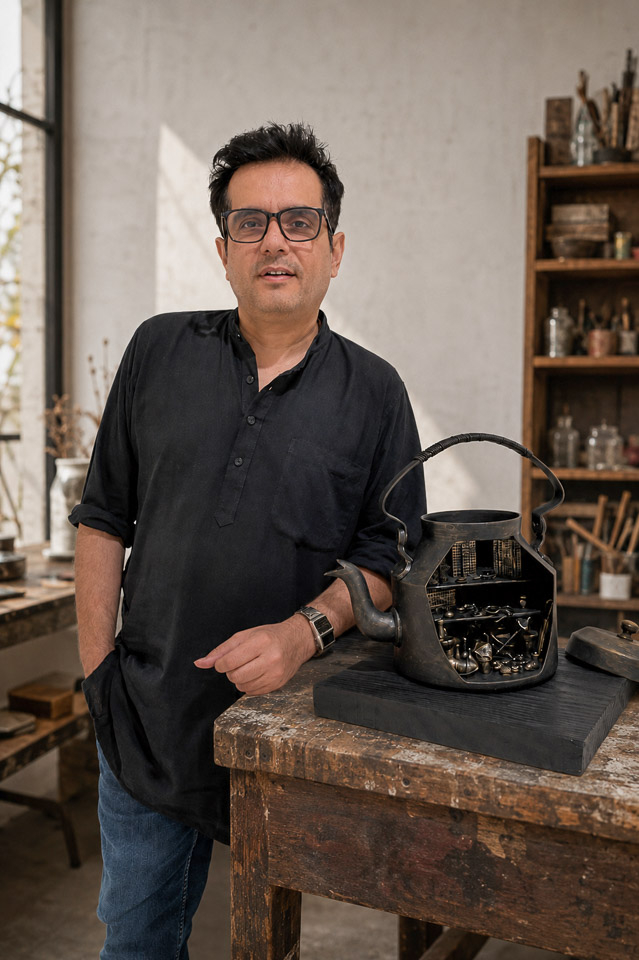
Suchit Sahni The kettle is intimate in scale, yet psychologically expansive. Unlike his larger sculptures which dominate space physically, the twelve inch format forces closeness. The viewer leans inward. The experience becomes private rather than theatrical. Smaller sculptures access memory differently. They activate fragments buried beneath routine and distraction. The smell of tea. Rain against windows. The sound of utensils in another room. The comfort of knowing somebody else was awake in the house.
Small things.
Almost nothing.Yet somehow those fragments become the emotional architecture of an entire life.
Sahni understands that memory rarely survives through monumental events. It survives through objects. Through repeated gestures. Through atmospheres that once felt ordinary enough to ignore.
That insight gives his work depth beyond nostalgia as aesthetic trend.
Many contemporary artists use nostalgia superficially. Retro imagery and childhood references often collapse into sentimentality or visual comfort. Sahni avoids that entirely because his sculptures remain grounded in materiality, restraint and psychological truth. Metal changes the emotional reading of the object completely. A kettle becomes archaeological. Domestic memory becomes cultural evidence.
The material itself matters enormously.
In a culture increasingly dominated by screens, the tactile presence of sculpture feels almost radical. Sahni’s works occupy real space. They cast shadows. They carry texture, density and resistance. The viewer registers dents, marks and imperfections. Sculpture slows people down. It demands duration. It asks viewers to physically exist alongside memory rather than consume it passively through images.
That is precisely why this work feels so relevant today.
Sahni belongs to a generation shaped by India’s economic and cultural transition during the eighties and nineties. Liberalisation altered aspiration, taste and domestic life permanently. Satellite television entered homes. Western advertising merged with older Indian routines. Families existed between two psychological worlds at once. Older habits remained intact while newer ambitions arrived through television screens and consumer culture.
His sculptures quietly preserve that tension.
The monochromatic bronze surface becomes crucial within this framework. Most memories eventually lose clarity. They flatten into tonal impressions and emotional residue. Sahni captures this beautifully through his restrained metallic palette. The bronze finish avoids decorative seduction completely. Instead, it creates stillness, age and distance. The sculpture feels suspended somewhere between relic and recollection.
This restraint is what gives the work credibility.
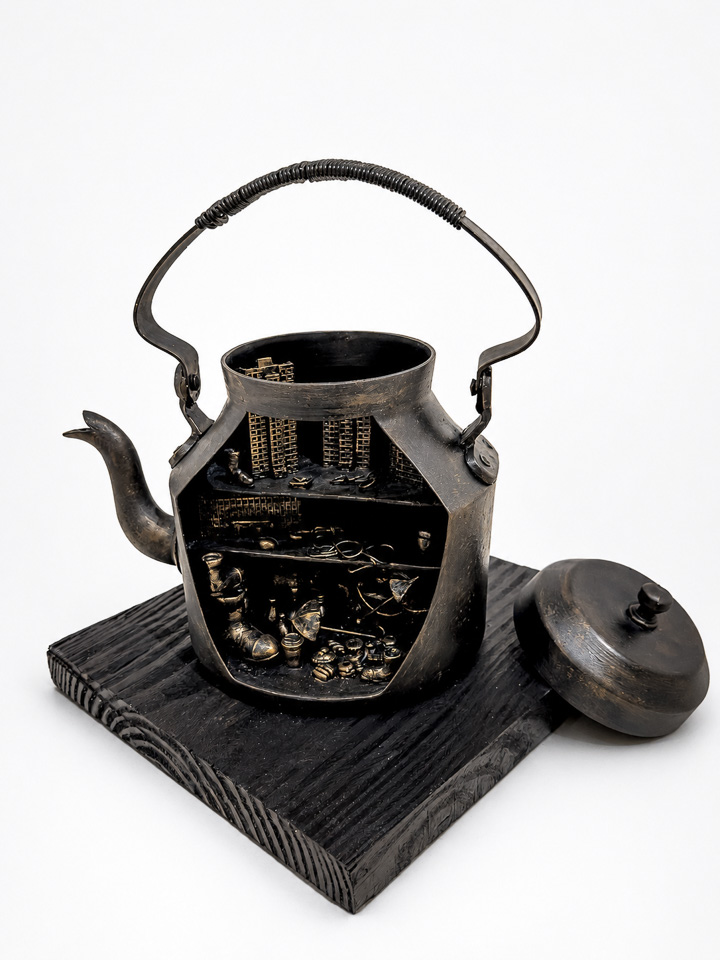
Sahni never romanticises nostalgia blindly. The surfaces retain grit. Imperfections remain visible. The object feels lived with rather than idealised. That tension prevents the work from collapsing into comfort. Instead, the sculpture asks more difficult questions. What parts of life disappear first when societies modernise too quickly. What emotional spaces survive adulthood. What happens to memory when attention itself becomes fragmented.
Maybe adulthood is just the slow replacement of memory with productivity.
That thought lingers throughout the work.
There is also a larger cultural argument embedded inside these sculptures. Everyday urban objects deserve preservation because they reveal shifts in class, aspiration, domestic behaviour and identity as clearly as political history does. A kettle can speak about migration, middle class ambition, changing family structures and generational transition. Sahni elevates overlooked objects into markers of cultural memory. He treats ordinary life with seriousness.
That decision feels increasingly important now.
Contemporary life produces endless images but very few lasting objects. Devices become obsolete. Platforms disappear. Digital memory remains unstable by nature. Sahni’s sculptures resist that instability completely. Metal survives physically. It ages with dignity. It remains touchable. In many ways, his practice argues for the return of tactile memory itself.
Few contemporary artists working with nostalgia balance emotional accessibility and conceptual clarity this effectively. Sahni’s sculptures feel immediate, yet they continue unfolding intellectually long after the initial encounter. They are contemporary without abandoning history. Emotional without becoming sentimental. Familiar without losing complexity.
The twelve inch kettle demonstrates exactly why Sahni’s practice deserves serious attention from collectors and institutions alike. He is building a body of work around memory, material and cultural transition at a moment when all three subjects are becoming increasingly urgent.
Artists capable of transforming ordinary objects into emotionally charged cultural artefacts rarely remain accessible for long.
Collecting Suchit Sahni now feels less like speculation and more like recognition.
-
The Disappearance of Risk
Why contemporary art increasingly feels resolved before it feels honest.
Risk has not disappeared from contemporary art because artists suddenly became less intelligent. It disappeared because the ecosystem became more efficient. Galleries want predictability. Collectors want reassurance. Institutions want alignment. Social media rewards instant readability. Art fairs compress attention spans into seconds. Slowly, artists begin adjusting the work before anybody even asks them to.
That is the real shift. Censorship today rarely arrives directly. It arrives through anticipation. The artist begins editing themselves internally. The work becomes smoother. Cleaner. Easier to place. Easier to photograph. Easier to explain during a walkthrough or over dinner. You can feel it while walking through fairs now. So much work appears professionally resolved before it has emotionally matured. Everything looks ready for circulation. Ready for shipping. Ready for Instagram. Ready for institutional language. Very little feels dangerous to the person who made it.
Real risk in art has very little to do with visual extremity. It is psychological exposure. A quiet painting can contain enormous risk if the artist has placed uncertainty, confusion, fear, obsession, or contradiction inside it. A politically loud installation can contain absolutely no risk if every ideological position within it has already been socially approved. That is where much contemporary art has become confused.
Many artists are now producing work around accepted anxieties instead of personal discoveries. Climate anxiety, identity, surveillance, archives, systems of power, memory. These subjects matter deeply. Some artists approach them with urgency and depth. But much of the work surrounding these themes feels emotionally pre approved. The audience senses it immediately. You stand before certain works and realise every decision already feels managed. The colours are correct. The references are current. The politics are safe. The ambiguity has been reduced enough to remain accessible while still appearing intellectually layered.
Nothing resists the viewer anymore.
That resistance matters. Great art destabilises people slightly. Sometimes emotionally. Sometimes intellectually. Sometimes morally. It creates friction between what is being shown and what the viewer expects from it. Much contemporary art now seeks approval too quickly. It wants to be understood immediately. It wants agreement before contemplation.
Part of the problem is visibility itself. Artists now develop their practice publicly in real time. Earlier generations could fail privately for years. Weak work remained inside studios. Experiments disappeared quietly. Now everything is uploaded, shared, archived, circulated. This creates pressure toward coherence. Artists begin shaping a recognisable identity instead of following uncertainty. Careers become dependent on continuity. Galleries need stable narratives. Collectors expect recognisable production. Curators prefer artists whose language already exists.
The result is work that often feels emotionally processed before it even reaches the wall.
You rarely encounter genuine confusion anymore. Genuine obsession. Genuine collapse. Even rebellion has become visually familiar. Many artists are also overexposed to the art world itself. Too many fairs. Too many openings. Too much discourse. Too much awareness of positioning. Work begins getting made while imagining its reception. That is usually where the danger disappears.
Strong work often emerges when the artist temporarily loses awareness of audience altogether. When they become consumed by a material, an image, a memory, a formal problem, a fear, a fixation. Something that exceeds career management. The tragedy is that younger artists are entering professional systems before they fully develop internal conviction. Visibility arrives before solitude. Recognition arrives before depth.
The market rewards speed. Serious work usually requires slowness.
Risk also disappears when survival becomes expensive. Studio rents rise. Production costs rise. Attention spans shrink. Financial instability encourages caution. Safe work becomes economically practical. Repetition becomes sustainable. That reality should be acknowledged honestly instead of romanticising struggle.
Still, some artists continue resisting this quietly. You notice it in works that remain unresolved. Works that refuse immediate readability. Works carrying contradiction without cleaning it up for the viewer. Work that feels emotionally necessary instead of strategically positioned.
These works still exist. They are simply becoming harder to notice in a culture increasingly rewarding fluency over discovery.
Fluency photographs well.
Discovery usually looks awkward at first.
-
Lines
For Abhijit Pathak, the line is a gesture, a structure, rhythm, and a direct emotional connection between thought and surface.
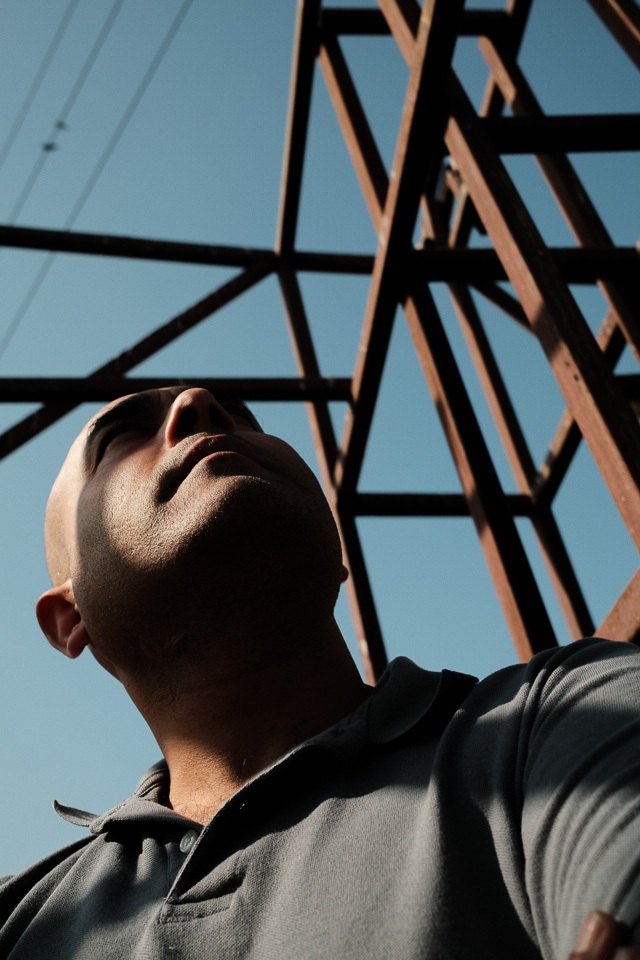
Abhijit Pathak I have always believed that the line is the first honest gesture in an abstract work. Before colour settles. Before texture builds. Before form begins to suggest meaning. The line arrives almost instinctively. It carries hesitation, rhythm, memory, tension, release. In many ways, it is closer to thought than image.
In my mixed media works, lines are rarely decorative. They are structural, emotional, and psychological. They move through the surface like traces of experience. Sometimes they behave like scars. Sometimes like maps. Sometimes like a language that has been erased halfway through speaking.
What interests me about abstraction is that it refuses certainty. A line inside abstraction does not have the responsibility of becoming a tree, a figure, or a horizon. It is free to exist as movement and feeling. This freedom allows the line to become deeply personal. A broken line can hold fragility. A dense accumulation of marks can suggest anxiety or restlessness. A slow horizontal drift can create silence.
In the smaller paper works, the line becomes intimate. The scale demands sensitivity. Every gesture matters. A slight pressure of the hand changes the emotional weight of the work completely. On paper, the line feels closer to breathing. It records pauses. It exposes vulnerability. The emptiness around it becomes equally important. I often feel that these smaller works are like private conversations with myself. The line moves carefully, almost cautiously, searching for balance within fragility.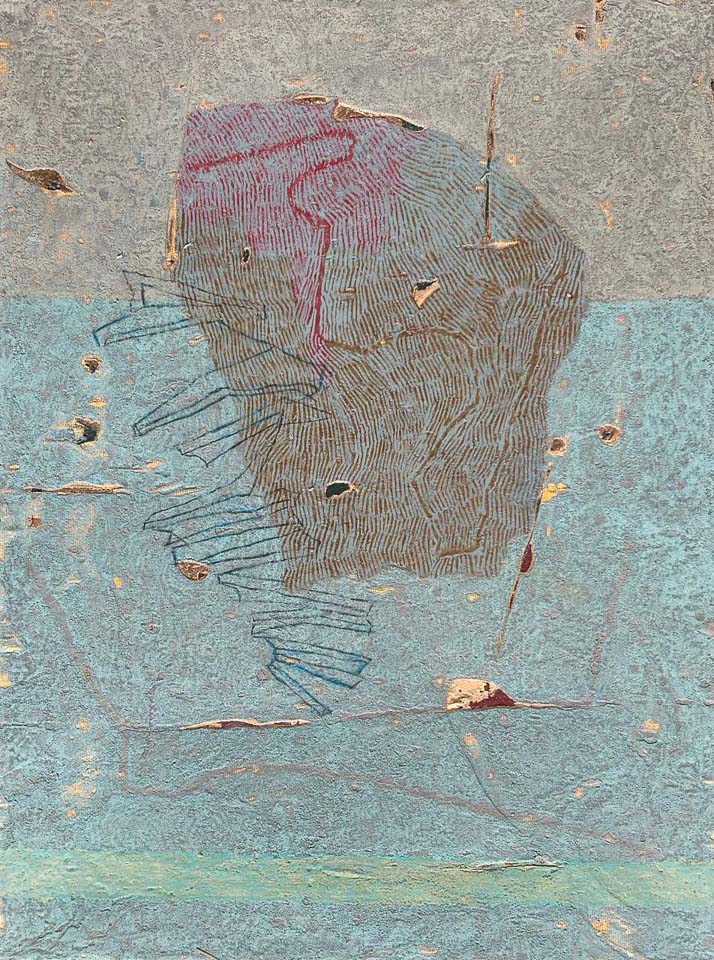
As the works expand onto large canvases, the line changes character. It becomes physical. The body enters the process differently. Movement becomes wider, more forceful, sometimes confrontational. The line begins to occupy space rather than simply exist within it. Large surfaces allow repetition, layering, collision. Certain lines dominate while others disappear beneath material and texture. This process mirrors the way memory itself functions. Some experiences remain visible. Others sink underneath yet continue shaping what sits above them.
Mixed media allows me to push the line beyond drawing. A line can emerge through stitching, scraping, tearing, layering, burning, or erasure. It can appear through absence as much as presence. This becomes important because life itself is layered. Human experience is never flat. We carry histories, interruptions, fractures, repairs. The line in my work absorbs these conditions. It behaves less like a controlled mark and more like evidence of process and time.
I am also interested in how viewers respond to lines inside abstraction. Without recognisable imagery, people begin projecting their own meanings onto these gestures. One person sees a landscape. Another sees architecture. Someone else sees emotional turbulence. This openness is essential to abstract art. The line becomes a point of entry into personal interpretation. It remains unresolved, and that unresolved state creates dialogue between the work and the viewer.
There is also something deeply human about lines. Long before painting became formalised, human beings drew lines on cave walls, on stone, on earth. The line is primal. It is perhaps the most direct connection between thought and hand. Even today, a trembling line can reveal more emotional truth than a polished image ever could.
In my practice, I return to lines because they continue resisting final definition. They remain alive. They shift between drawing and writing, between gesture and structure, between control and accident. They allow abstraction to stay open, emotional, and uncertain.Abhijit Pathak
-
Harpreet Narula
Meditative abstractions built through repetition, rhythm, and disciplined mark making that balance stillness with emotional intensity.
Harpreet Narula’s abstraction carries a quiet intensity shaped through repetition, rhythm, and devotion to process. Lines, dots, and forms emerge with precision yet retain the warmth of the hand, turning each canvas into a record of continuity and presence. Influenced by the aesthetics of the Far East, Narula approaches pattern and repetition as meditative acts, where silence, balance, and restraint become central to the work. His canvases move inward, creating spaces of stillness, honesty, and calm. Saturated colour anchors these compositions, balancing emotion with structure while allowing energy and depth to unfold across the surface.
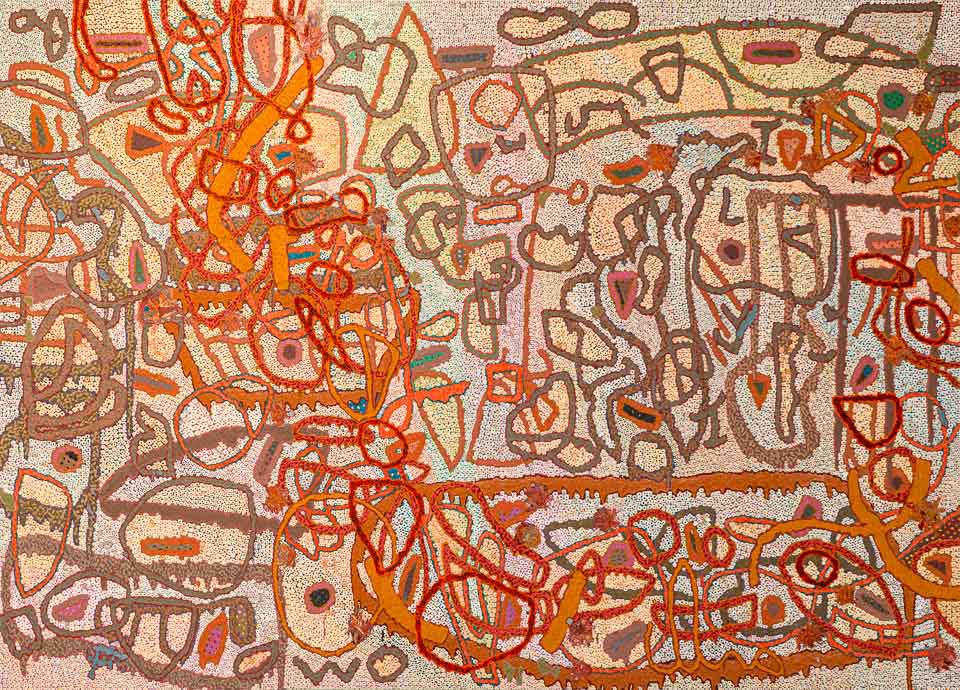
For Narula, painting is deeply personal, a daily act of grounding where subconscious impulses surface through rhythm and repetition. His works move beyond abstraction as style, becoming meditations on endurance, balance, and the search for clarity within the flow of life.
-
Rubkirat Vohra
An intimate conversation on faith, architecture, fragility, memory, ambition, and the search for emotional truth through abstraction.
The studio is quieter than expected. Large wooden surfaces lean against the walls carrying scratches, fractures, sanded edges, layers that appear excavated rather than built. Dust settles slowly across the floor. Afternoon light enters from one side of the room and remains there for hours. Nothing feels rushed.
While speaking, Rubkirat Vohra pauses often before answering. Certain questions seem to travel through memory before arriving in language.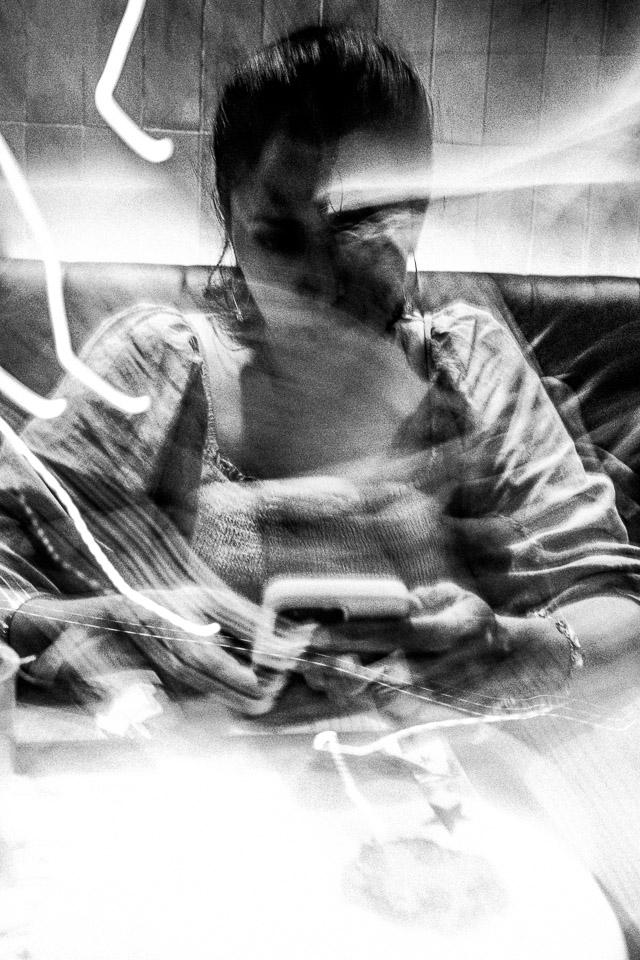
Rubkirat Vohra 1
Your work feels deeply connected to architecture, but also to emotion. Which came first for you, structure or feeling?Feeling. Always feeling. Even as a child, I reacted emotionally to spaces before understanding why. I remember old houses, fading walls, silent corridors, light entering a room at a certain hour. Those things stayed with me deeply. I think spaces absorb human
experience. They hold grief, memory, prayer. Architecture came later as a language through which I could process emotions that otherwise
felt too large or too personal to explain directly. But I have never been interested in architecture formally. I am interested in emotional residue. What remains after people leave. What remains after time passes. A wall can carry loneliness. A doorway can carry longing.2
You return repeatedly to the Mehrab form. What keeps pulling you back to it?The Mehrab feels spiritual to me even when I am not consciously thinking about religion while working. It feels like a threshold emotionally. A passage between inner and outer worlds. Between restlessness and surrender. There is also something unresolved inside me that keeps returning to it. Maybe a search for peace. Maybe freedom. Emotionally my mind is always moving. The Mehrab creates a psychological space where I can breathe again. Faith is deeply important in my life. During difficult phases, faith carried me forward when very little else made sense. That undercurrent remains inside the work even when the work becomes abstract.
3
Your surfaces feel less constructed and more excavated.Completely excavated.
I spend more time removing than adding. Scraping, sanding, damaging, rebuilding.Sometimes I feel the work already exists underneath and my process is about uncovering it slowly. I cannot work with polished surfaces. I need friction. I need evidence that something has survived. Emotionally also I connect to erosion deeply. Life changes people gradually. Loss changes
people. Waiting changes people. Even strength leaves marks. I want the work to carry that physically. Sometimes old weathered walls feel more honest to me than newly painted ones.A long pause follows this answer. Vohra runs her hand lightly across the edge of an unfinished wooden panel before continuing.
4
Wood has become central to your practice. What does it allow that canvas never could?Wood feels alive to me in a way canvas never did. Canvas can sometimes feel passive. Wood resists you. It cracks. It bends differently. It reacts to pressure, climate, handling. It refuses total control and I enjoy that relationship very much. I think emotionally I also resist control. I have always been headstrong. If I believe in something deeply, I pursue it fully even when the path becomes uncomfortable. Working with wood feels similar. It demands patience and respect. There is warmth in it. A physical presence. The imperfections become important. The cracks become important. I do not want sterile perfection in my work. I want humanity.
5
Your recent works feel quieter. Has maturity made you calmer or simply better at hiding turbulence?Maybe both. Earlier there was a lot of internal noise inside me. Ambition, uncertainty, emotional turbulence, all existing together. I still carry ambition strongly. I want the work to grow internationally. I want it to reach people deeply. That hunger remains. But somewhere over time I realised achievement and inner peace are completely different things.
I think the quieter quality in the work emerged when I stopped trying to force intensity onto every surface. Earlier I was afraid of emptiness inside the work. I wanted to keep pushing,
filling, searching. Now I trust restraint more.
Maybe maturity teaches you that strength does not always need to announce itself loudly.6
A lot of abstraction today feels emotionally over explained or decorative. Your work carries restraint. How do you stop before overworking a piece?Through failure honestly. I have destroyed many works by trying too hard. Sometimes the ego keeps interfering because you become emotionally attached to the process. You convince yourself the work still needs more when actually it is already complete. Over time I realised the strongest moments are often fragile ones. If you continue too long,the work loses breath. Earlier I would push surfaces until they became exhausted. Now I stop
earlier. Pain already exists naturally inside my work. I do not need to perform intensity artificially.7
Do you trust intuition completely, or has intuition also misled you?Intuition leads almost everything for me, but intuition can also mislead you emotionally. There are moments where instinct becomes confusion and you have to step away from the work completely. Usually the process begins with a feeling that refuses to leave me alone. Restlessness. Longing. Emotional confusion itself sometimes. I carry those states into the studio and begin
responding physically to the material. If something feels false internally, I cannot continue with it even if it appears visually successful.8
Your work often carries stillness. Is that something you search for outside the studio as well?Very much.
I think contemporary life has become emotionally exhausting. People are constantly reacting, consuming, explaining themselves. I need moments where the noise stops completely. Prayer gives me grounding. Faith gives me steadiness during uncertain phases. Sometimes I sit with a work for long periods before touching anything because I need clarity first. The studio often becomes an inward space for me.9
Has art helped you understand yourself better or simply helped you survive yourself?Probably both.
Art gave me a space where I could exist honestly without constantly explaining myself.Outside the studio life demands responsibility and performance all the time. Inside the studio. I can confront uncertainty quietly.
There were phases where only faith and work kept me emotionally steady. Even now I still feel like I am searching for something emotionally and artistically that I have not fully reached yet. Maybe that search itself keeps the work alive.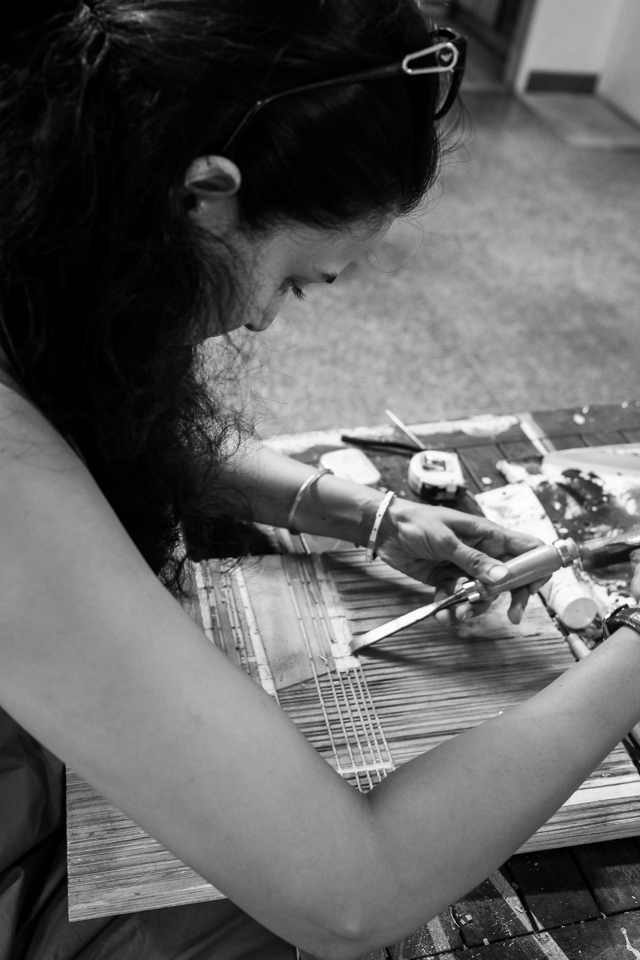
10
When you begin a work, do you begin with an image, memory, material, or mood?Usually a mood. Something emotional that stays unresolved for days or weeks. I rarely begin with a fixed image because I do not want to imprison the work too early. My emotional state enters the material before I consciously recognise it. The way I scrape a surface, the colours I reject, the areas I leave empty, all of that comes from somewhere internal. Sometimes memories surface unexpectedly during the process. Childhood atmospheres. Family spaces. Certain silences from the past.
11
Your surfaces often feel wounded. Is fragility important to you?Very important.
I do not trust perfection emotionally. Perfect surfaces feel distant to me. Controlled.
Untouched. Real life is never like that.
Fragility is where humanity becomes visible. Every person carries invisible cracks. The work allows vulnerability and strength to exist together. I want the surfaces to feel scarred but still standing.
There is dignity in survival.12
What kind of work makes you suspicious today?Work that feels emotionally pre decided.
Sometimes you stand before a work and immediately sense that every gesture already knows how it wants to be received. The politics are correct. The surface is resolved. The references are current. But emotionally nothing is at stake. I think viewers can sense honesty instinctively. Even imperfect work can feel alive if it
comes from genuine searching.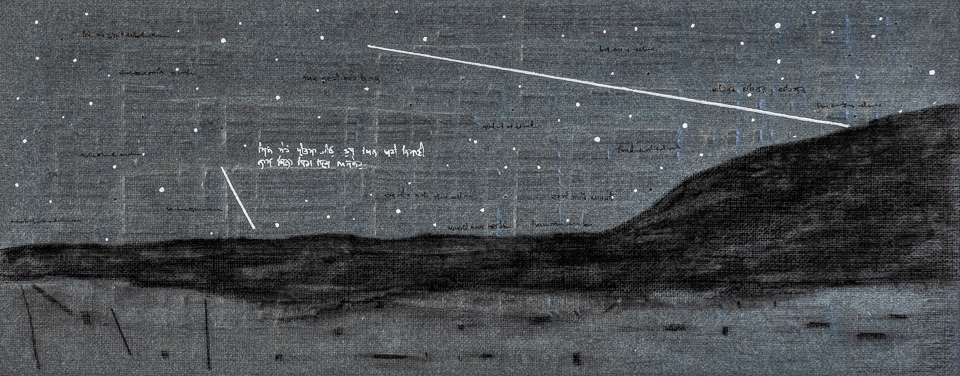
13
Has living in urban spaces shaped your visual language?Deeply.
Cities affect me psychologically. Noise, movement, construction, emotional fatigue. People surrounded by others but still isolated. I absorb urban surfaces intensely. Crumbling walls, electric wires, unfinished structures, fading paint. But I think my work is also resisting that speed. It is searching for slowness inside chaos.14
Do you think younger artists today become visible before they become internally ready?Yes. Everything moves too quickly now. Visibility arrives very early. Social media, fairs, pressure to remain relevant constantly. Artists begin developing publicly before they have had enough solitude with themselves.
That can become dangerous creatively because the artist slowly becomes aware of audience all the time. Work begins shaping itself around reception and recognisability. Meaningful work needs uncertainty. Some works require long periods of invisibility before they can exist honestly.15
Art fairs and exhibitions bring visibility. Studios remain private worlds. Which space feels more truthful?The studio completely.
Exhibitions show resolved work. The studio shows the actual person. The uncertainty, failures, unfinished thoughts. The studio contains the emotional truth behind the practice. There are days where nothing works and you still have to continue. That relationship with yourself is far more honest than visibility.16
Do you think success slowly trains artists toward repetition?It can.
Success can quietly make artists fearful. People begin expecting a certain kind of work and repetition starts feeling safer. I fight that internally. I would rather struggle honestly than become emotionally repetitive. Once the work loses curiosity and risk, something important disappears creatively.17
What scares you more, repetition or failure?Repetition.
Failure still carries possibility. It means you attempted something honestly. Repetition feels emotionally dead. Once the work loses curiosity and risk, it loses life. I never want comfort to make the work predictable.18
What has been the hardest part of your journey so far?Balancing inner life and outer life.
I love my family deeply and I carry emotional responsibility strongly. At the same time I have an intense drive to grow as an artist. Those worlds can pull you in different directions emotionally. There were periods of self doubt where I questioned everything. The work, the path, myself. People see exhibitions and achievements. They rarely see the emotional struggle underneath them.19
What changed internally for greater clarity to emerge in your practice?I stopped trying to satisfy external expectations constantly.
Earlier there was pressure to explain the work intellectually or fit certain trends. Over time I realised clarity only comes when you become honest with yourself first.
Faith also changed me. I became calmer internally. Less desperate for immediate answers.20
At what point do you know a work is finished?When it becomes emotionally quiet.
Sometimes during the process the work keeps demanding more from me. More tension, more searching. Then suddenly something settles. The work stops asking questions. If I continue after that point, I usually damage the piece.21
What are you searching for right now that you still have not reached?Freedom. Emotional freedom. Inner peace. I want the work to become simpler but deeper. That is much harder than complexity. To say something truthful with very little. To create stillness without emptiness. At the same time I still carry ambition strongly. So there is always tension between striving and surrender.
22
If someone encounters your work ten years from now, what do you hope remains beyond trend or context?Sincerity. Emotional truth. Humanity.Even during difficult phases of life, I have always believed there is light somewhere beyond struggle. Faith taught me that. If someone stands before the work years later and feels less alone emotionally, even briefly, I think the work has succeeded.
-
Balasaheb and Metal
Metal sculptures where polished brass and dark gunmetal surfaces become meditations on erosion, memory, permanence, and time.
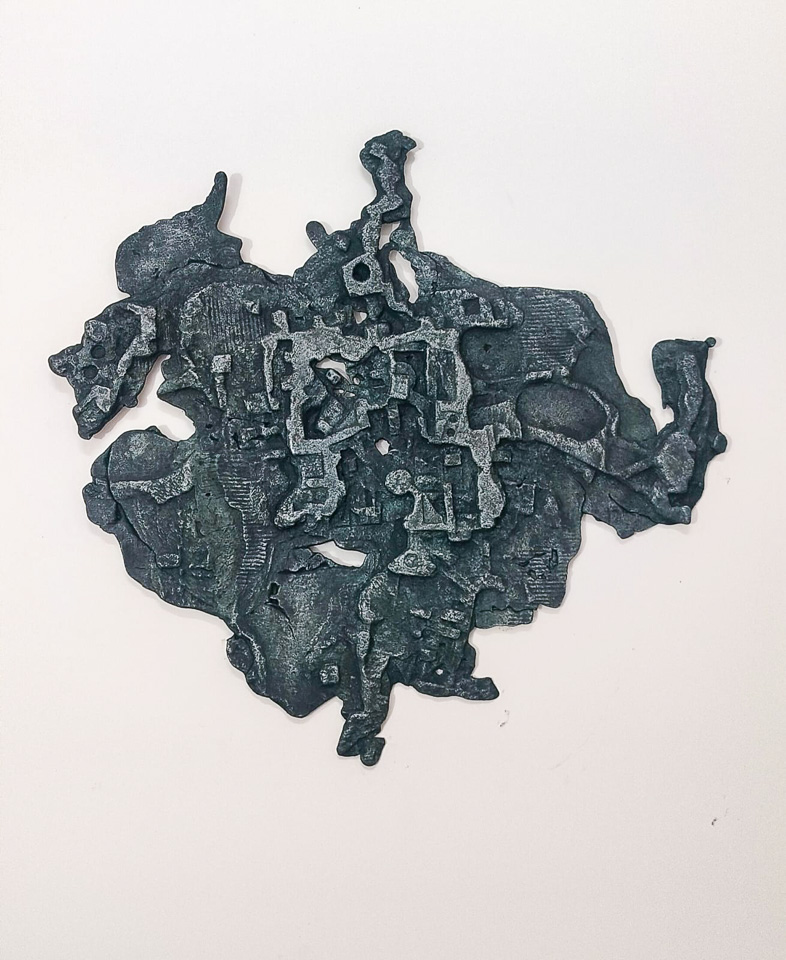
Balasaheb Chaudhari’s metal works unfold through the contrasting presence of polished brass and darker gunmetal finishes, each carrying its own emotional and visual language. The brass works radiate warmth and luminosity, their reflective surfaces constantly shifting with light to give texture a living presence. They evoke a sense of timelessness and quiet monumentality, transforming organic forms into objects that feel sacred and enduring. In contrast, the gunmetal works move toward restraint and introspection. Their darker surfaces absorb light, allowing texture and depth to emerge gradually through shadow and silence. These works carry a raw industrial character tied to erosion, weathering, and the passage of time, giving the forms a heavier and more grounded emotional weight. Moving away from the softness of paper pulp and the solidity of cement, Chaudhari’s use of metal introduces permanence with greater complexity, where memory, material, and texture merge into sculptural forms that feel both sensitive and enduring.
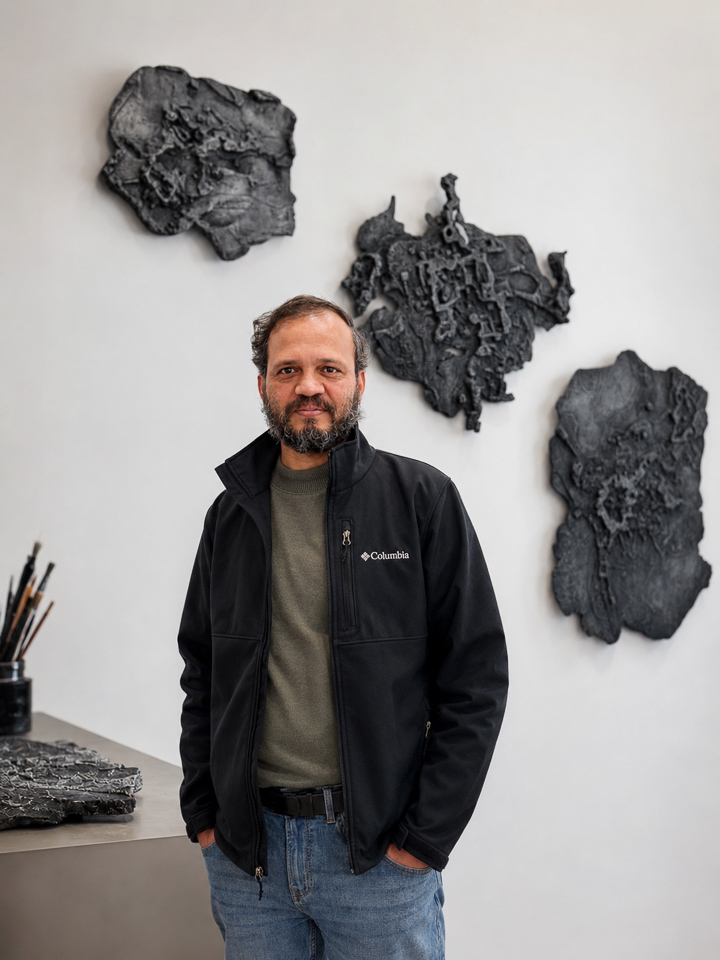
Balasaheb Chaudhari
-
Before Looking
An essay on how wall texts, institutional language, and over explanation are reshaping the way viewers encounter art.
Wall texts were meant to guide viewers gently into a work. Somewhere along the way, they became protective shields. Today, many exhibitions feel less interested in allowing viewers to experience art directly and more interested in making sure nobody misunderstands the artist’s intentions.
That anxiety is visible everywhere.
You enter exhibitions now and encounter paragraphs explaining politics, process, materiality, archives, memory, identity, research, geography, trauma, displacement, systems, intervention, ecology, resistance. By the time you finish reading, the work itself often feels strangely absent. The language arrives before the encounter.
This is one of the quiet tragedies of contemporary art. The viewer increasingly experiences the explanation before the object.
And explanation changes perception permanently.
Once language instructs viewers how they are supposed to feel, the space for uncertainty begins shrinking. The work becomes framed psychologically before it is even seen properly. Sometimes wall texts are so emotionally and intellectually overdetermined that viewers stop looking altogether. They simply search for confirmation of what they already read.
Many institutions now seem deeply uncomfortable with silence. Every work must justify itself immediately. Every ambiguity must be contextualised. Every visual gesture must be translated into language before the viewer has time to sit with confusion, contradiction, boredom, attraction, resistance, discomfort, or curiosity.
But art has always depended partly on uncertainty.
Some of the most powerful encounters with art happen before understanding arrives. A surface unsettles you. A colour stays with you. A space creates emotional tension you cannot fully explain. That experience matters. It should not always be interrupted by institutional interpretation arriving too early.
Of course context can deepen engagement. Good writing can illuminate a work beautifully. The problem is not writing itself. The problem is defensive writing. Writing that feels designed to protect the work from criticism, simplify interpretation, or establish intellectual legitimacy before emotional engagement has even begun.
You can feel this particularly strongly in contemporary exhibitions where the wall text carries more conviction than the work beside it.
Sometimes the writing performs seriousness more aggressively than the art.
There is also a growing fear within institutions that viewers may encounter work “incorrectly.” So texts become increasingly explanatory, careful, academically padded, politically aware, emotionally managed. The result is language that often sounds interchangeable from one exhibition to another. Entire paragraphs can move between artists without significantly changing meaning.
Words like interrogation, liminality, negotiation, intervention, rupture, material inquiry, spatial memory, fragmented narratives. They circulate endlessly through contemporary art language until they lose all sensory connection to actual experience.
The irony is that viewers are far more perceptive than institutions often assume. Most people can sense emotional truth in a work without needing theoretical permission first. They can recognise sincerity. They can recognise tension. They can recognise emptiness too.
Sometimes a single sentence beside a work is enough.
Sometimes no text at all is more powerful.
Earlier generations often encountered artworks with far less mediation. They spent longer looking. They argued. Misunderstood things. Returned later. Formed relationships slowly. Today viewers are increasingly trained to consume interpretation quickly and move on.
The speed of explanation has started replacing the slowness of observation.
Part of this also comes from the broader culture surrounding contemporary art. Institutions feel pressure to appear intellectually rigorous. Curators feel pressure to frame exhibitions within larger social and theoretical conversations. Artists feel pressure to articulate their work fluently. Over time, language begins expanding around the work like insulation.
The danger is that the work itself slowly stops carrying enough weight independently.
Strong art should retain some resistance even after explanation. It should exceed the paragraph beside it. It should leave something unresolved.
Because ultimately, viewers rarely remember wall texts years later.
They remember atmosphere.
A shadow.
A surface.
A silence.
A feeling they could not fully explain while standing in front of something.
-
Kiyomi Talaulicar
Quiet and introspective works exploring negative space, spontaneity, silence, and the layered complexity of emotional experience.
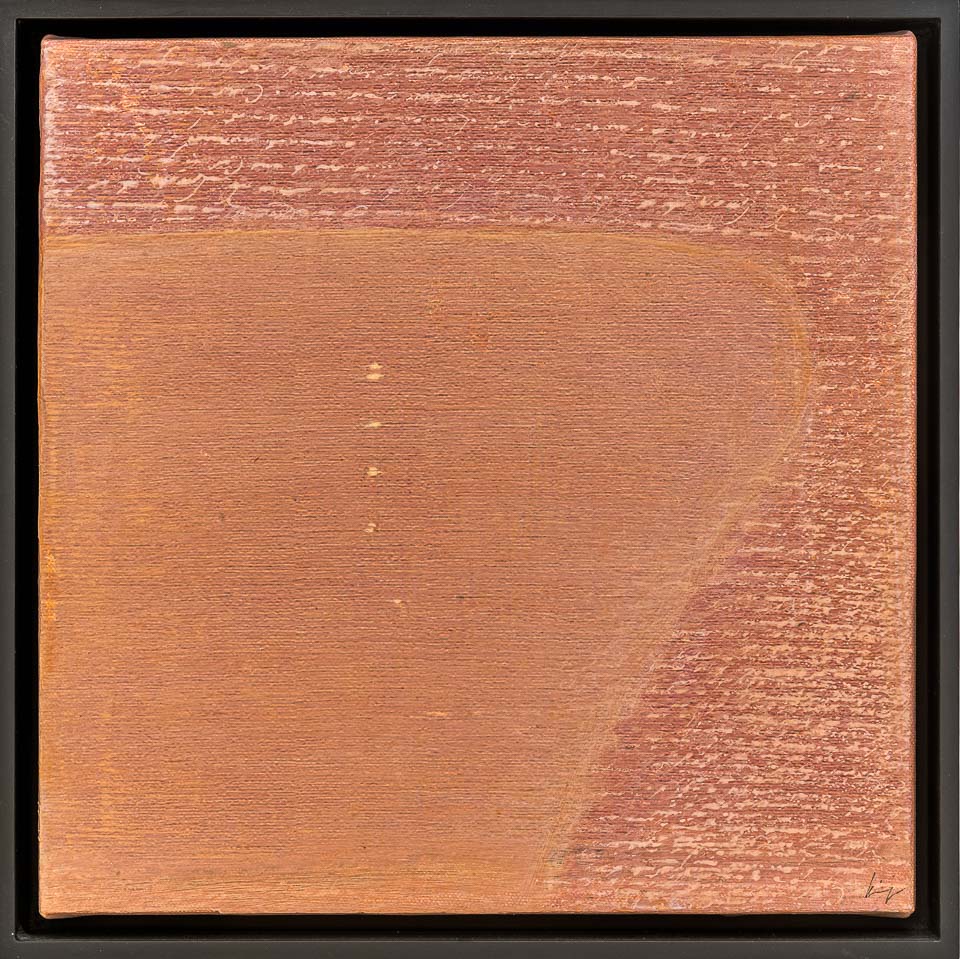
Kiyomi Talaulicar’s art is an invitation to slow down, to engage with the unseen, and to embrace the layered complexities of existence. Through her use of negative space, texture, colour, and spontaneity, she crafts pieces that are deeply introspective and emotionally resonant.
-
In an Age of Visibility
Reshma Chordia reflects on galleries, power, commerce, visibility, and the shifting realities of the contemporary art ecosystem.
There are days I wonder if the gallery still matters. Not the business. The space itself. The white cube. The room with polished floors, careful lighting, controlled silence. I still believe in it. But I no longer believe it holds the same authority it once did.
The Indian contemporary art scene is brutal. Quietly brutal. People speak about community, support, dialogue. Behind that language is competition, positioning, survival. And yes, much of it is controlled by women. Strong women. Intelligent women. Ruthless women. Is that a good thing? I am still deciding.
Sometimes I think women brought emotional intelligence into the ecosystem. Sometimes I think they perfected the politics of exclusion. The art world likes to imagine itself progressive. It rarely is. It functions on access, proximity, favour, perception. The currency is social before it becomes financial.

Reshma Chordia
The role of the gallerist has changed because the viewer has changed. Attention has changed. Speed has changed.
Earlier, a gallery could build an artist over ten years through patience, scholarship, museum placements, difficult conversations. Now the pressure arrives instantly. Visibility has become immediate. Validation has become public. Every exhibition enters the world already surrounded by images, opinions, captions, previews, speculation.The white cube used to introduce meaning. Now it often confirms meaning that has already circulated online.
Sometimes I feel the exhibition itself is the final paragraph of a conversation that began months earlier on Instagram, in WhatsApp groups, in podcasts, in collector dinners, in essays nobody fully reads but everybody references. The gallery has become a culmination point. A site of validation. A physical stamp placed on an idea already moving through the bloodstream of culture.That shift changes the responsibility of the gallerist. You can no longer operate as a gatekeeper sitting behind taste and authority. You have to listen more carefully. You have to understand how viewers move emotionally, visually, psychologically. Why they stop. Why they scroll. Why they buy. Why they pretend to care.
The balancing act becomes exhausting.
What is serious work? What has commercial value? Where do they meet? Do they even need to meet?Every gallerist lies when they say commerce does not affect programming. Of course it does. Rent affects aesthetics. Salaries affect curatorial decisions. Collector relationships affect courage.
But cynicism alone is lazy. Commercial success does not automatically make work shallow. Difficulty does not automatically make work important.
The real challenge is maintaining long term vision inside short term noise.Artists need emotional support now as much as representation. Collectors want access, intimacy, immediacy. Viewers want context before they enter the room. And galleries are expected to be cultural spaces, media platforms, social clubs, archives, consultants, therapists and sales rooms at the same time.
Some days I miss slowness. I miss uncertainty. I miss when people stood in front of artworks longer than they stood in front of themselves.
But I also recognise something honest in this moment. The hierarchy between institution, gallery and audience has cracked open. People question more. Younger viewers arrive informed. Artists speak directly. The white cube is less sacred now, and maybe that is healthy.
A gallery today cannot survive on intimidation. It survives on relevance. On trust. On relationships that last longer than trends.
And perhaps that is the real role of the gallerist now. To remain steady while everything around them performs urgency.Reshma Chordia
Visit the gallery website: ART EXPLORE