On Jitish Kallat and Conjectures on a Paper Sky
Jitish Kallat has long been one of my favourite artists. There is something about the way he thinks, the questions he raises and the sheer ambition of his practice that has always held my attention. His work often takes us into territories that are vast, complex and difficult to comprehend, yet he has an unusual ability to bring these ideas back to something deeply human.

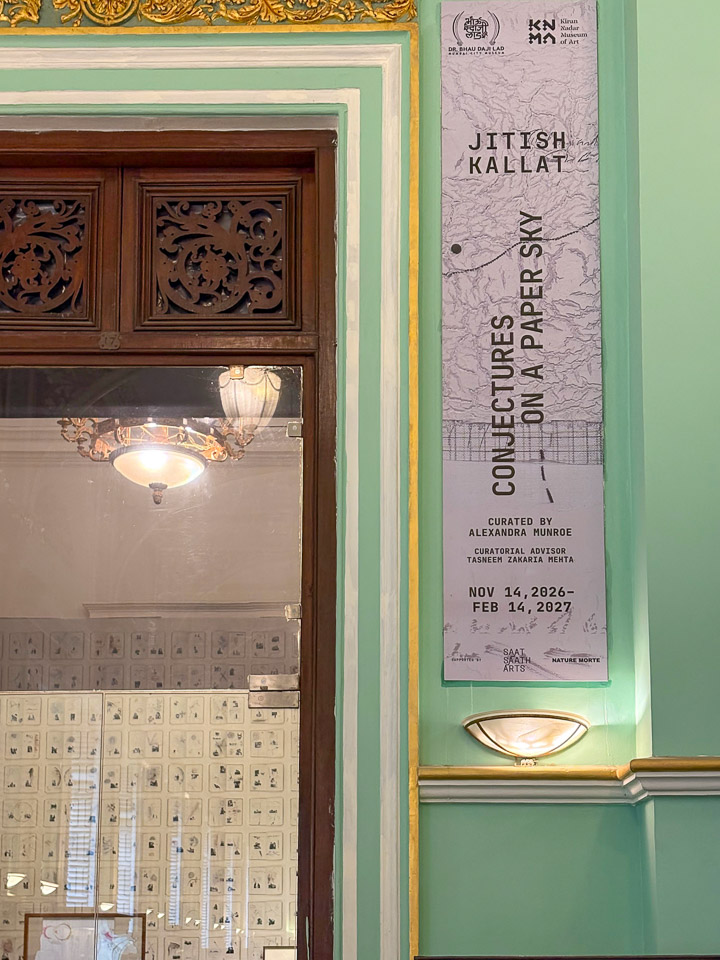
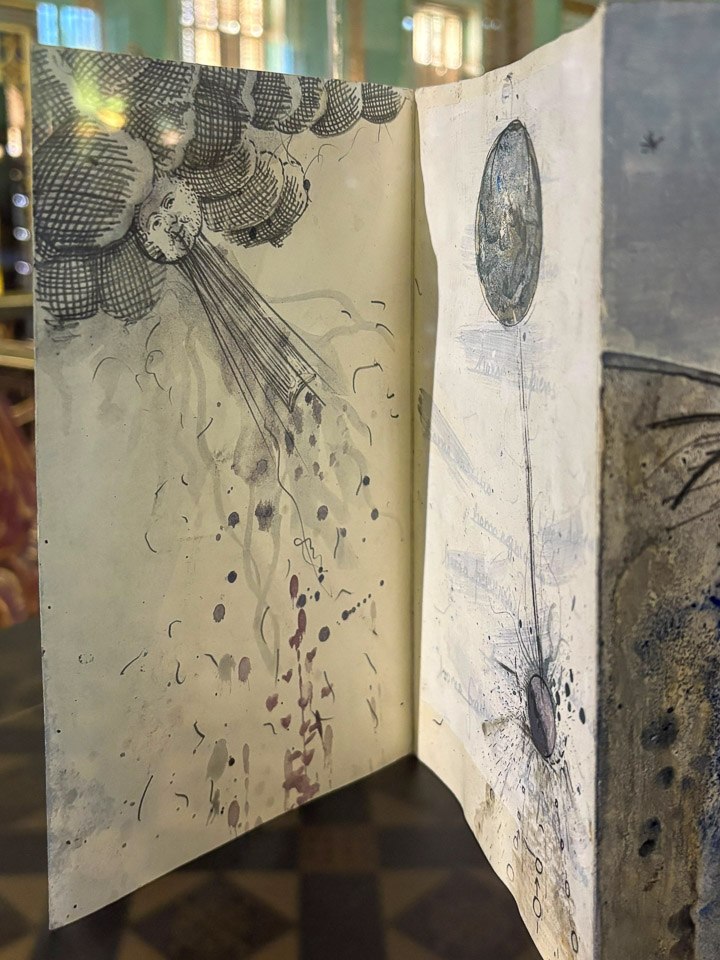
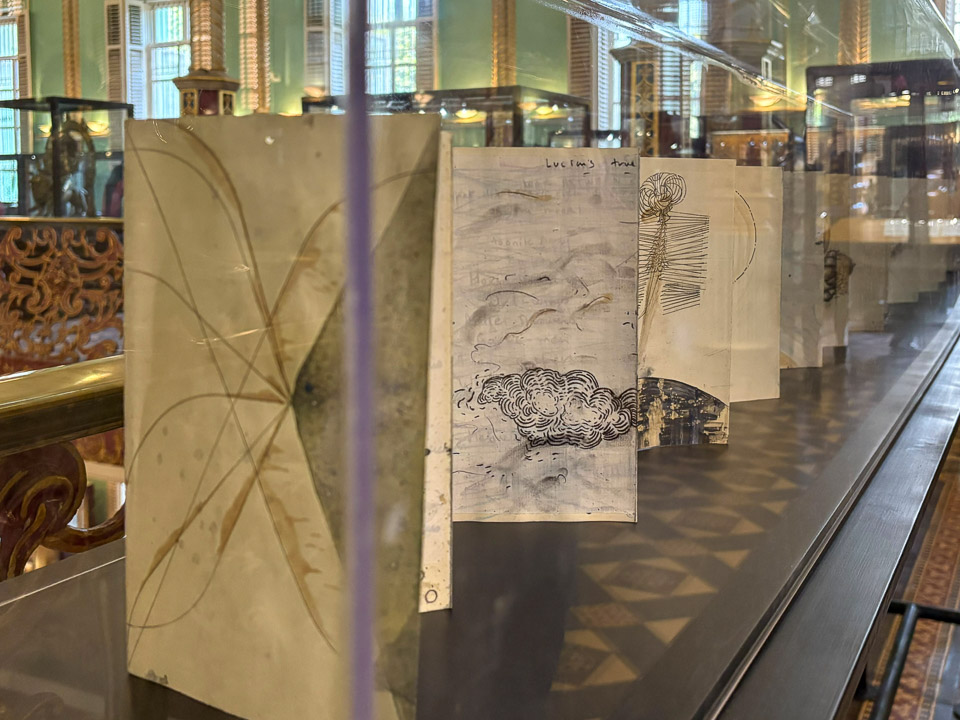
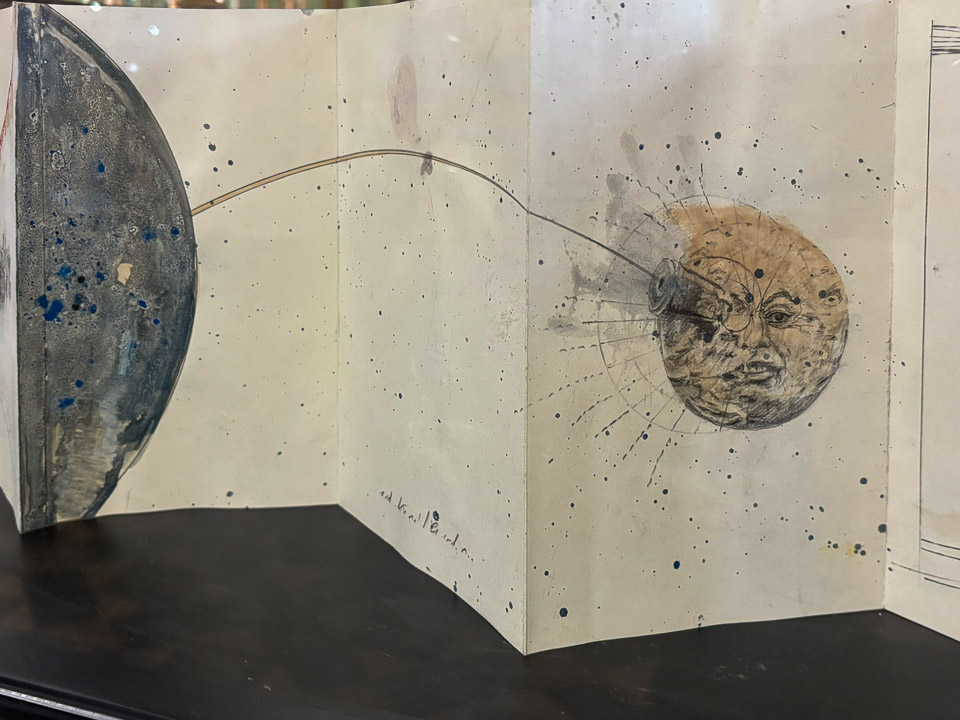
His current exhibition, Conjectures on a Paper Sky, at the Dr Bhau Daji Lad Museum in Mumbai, is a remarkable example of this. What strikes me first is its sheer scale. And I mean scale in every sense of the word. The physical dimensions of the works, the number of works brought together, the breadth of research and, above all, the ambition behind the entire undertaking.
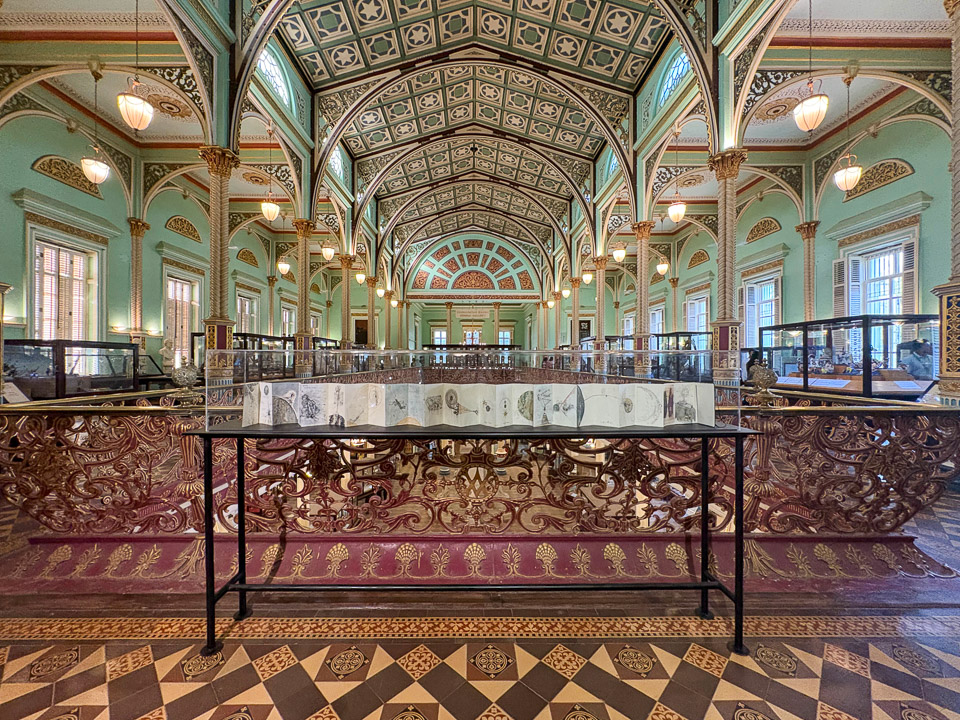
Curated by Dr Alexandra Munroe, with Tasneem Zakaria Mehta as curatorial advisor, the exhibition brings together paintings, drawings, sculptures, lenticular works and installations from the past decade. First presented at the Centre for Contemporary Art, Bikaner House, New Delhi, in February 2026, the Mumbai presentation is extended and reconfigured within the historic architecture of the Dr Bhau Daji Lad Museum. The museum itself becomes part of the experience, with works occupying its galleries, special exhibition spaces and outdoor plaza.
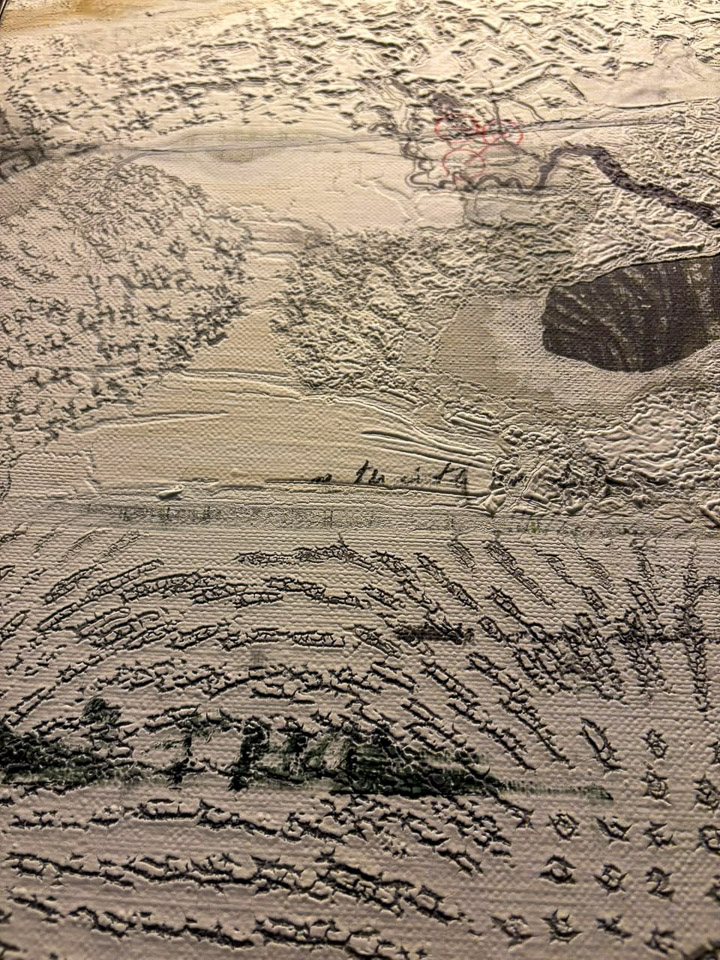
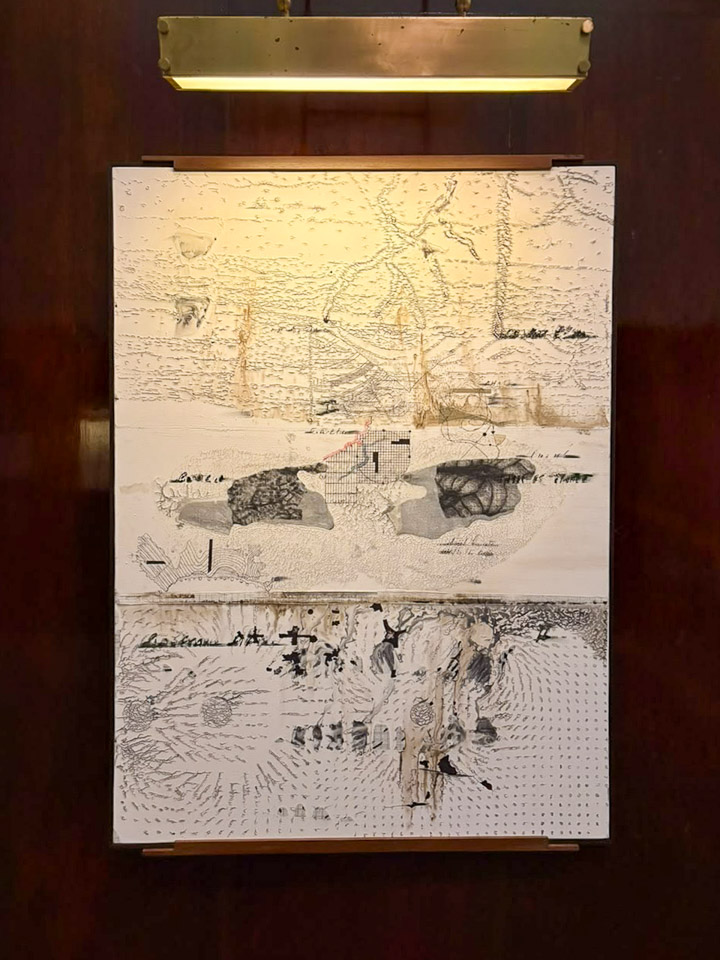
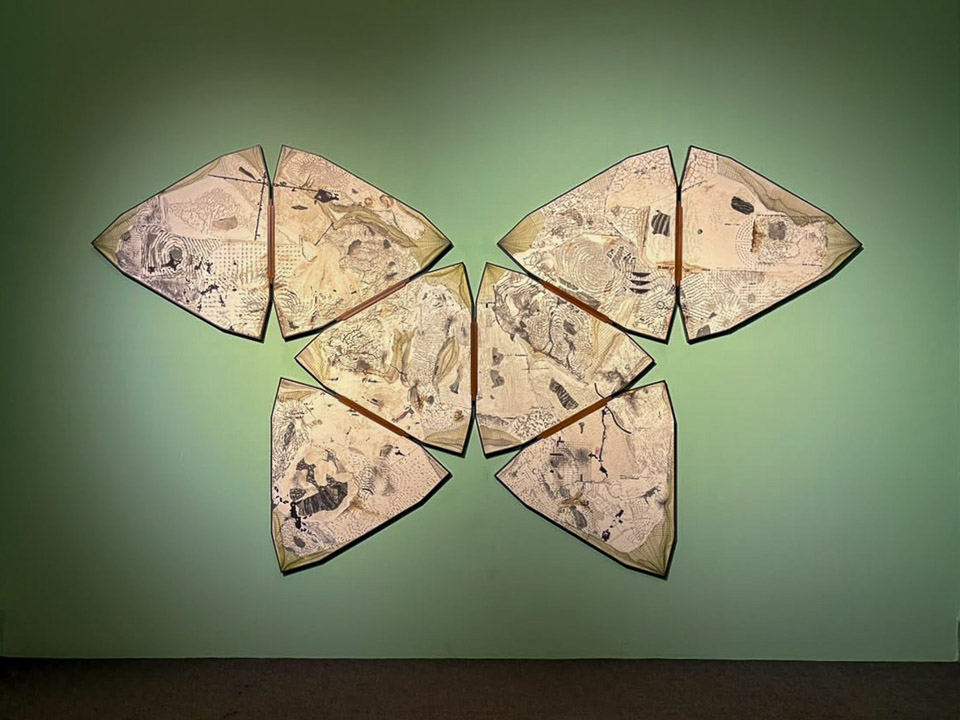
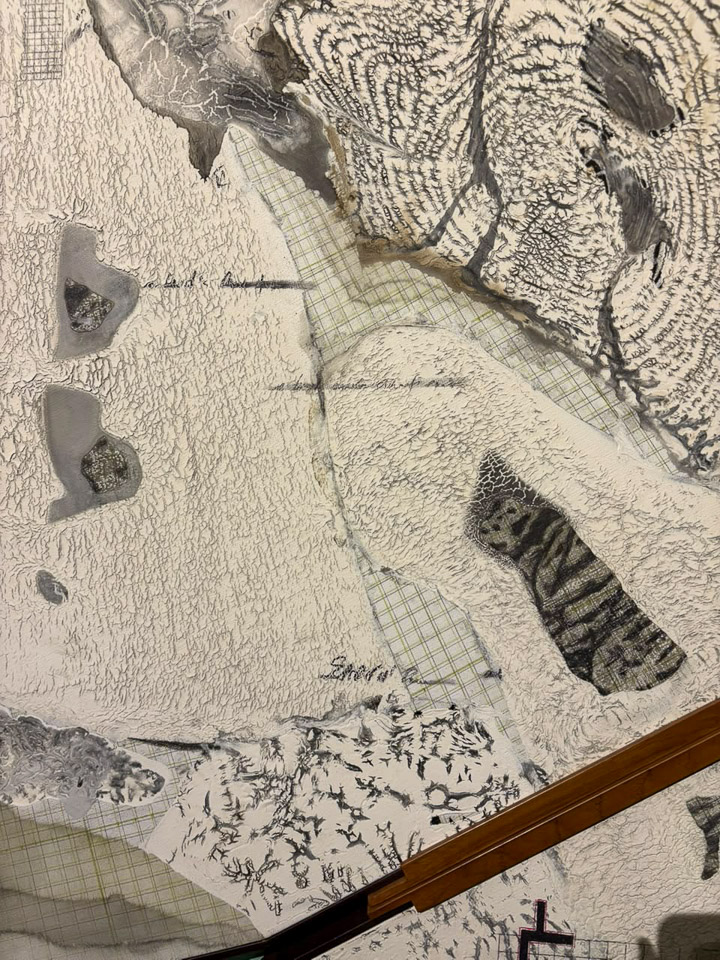
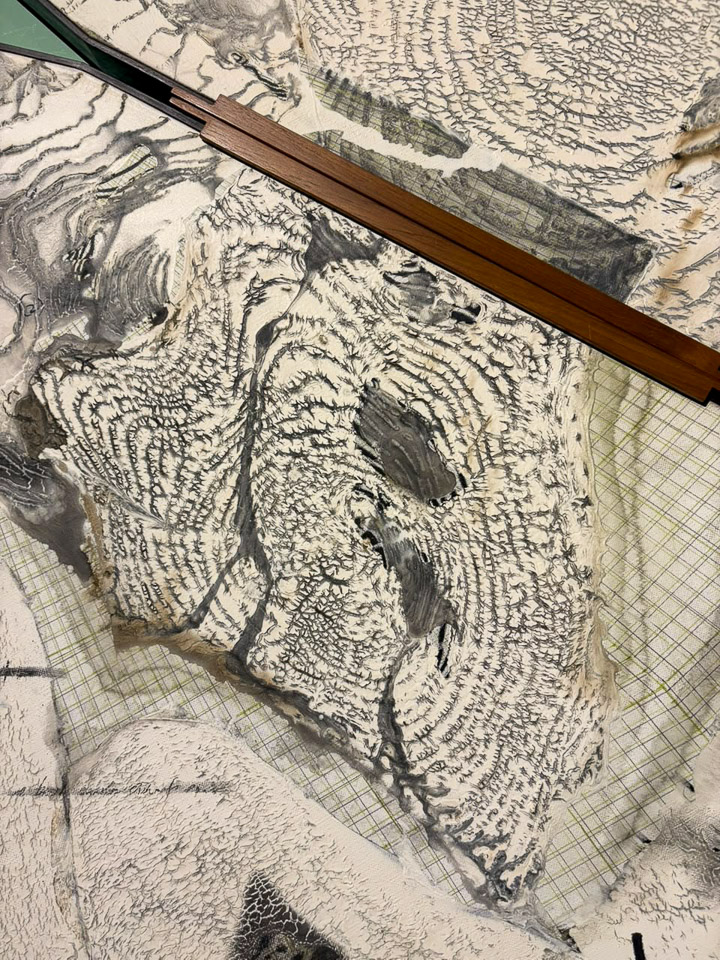
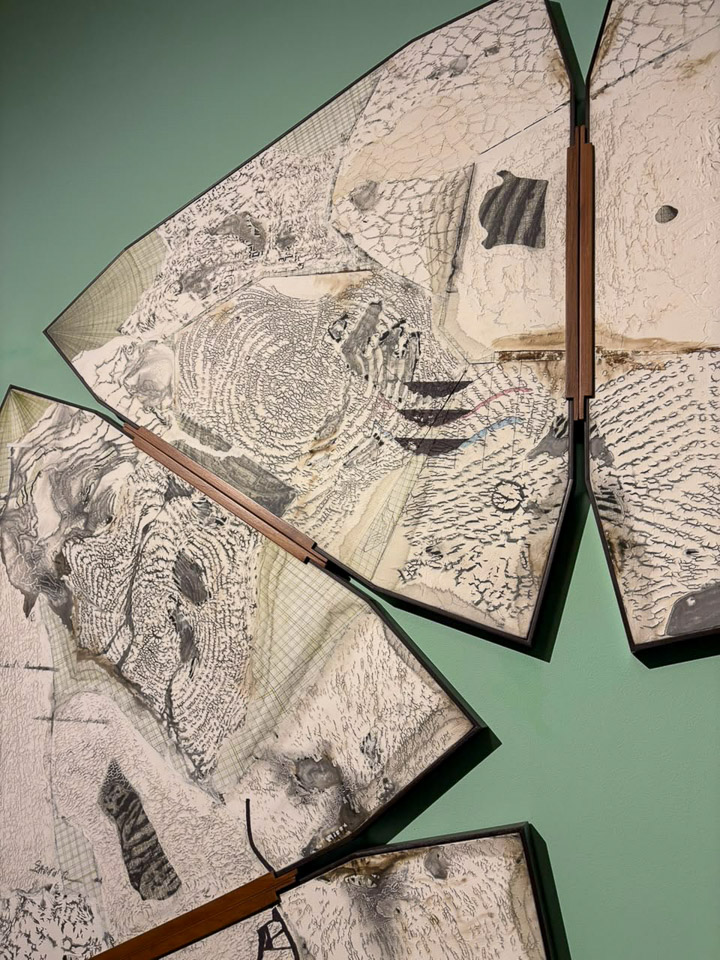
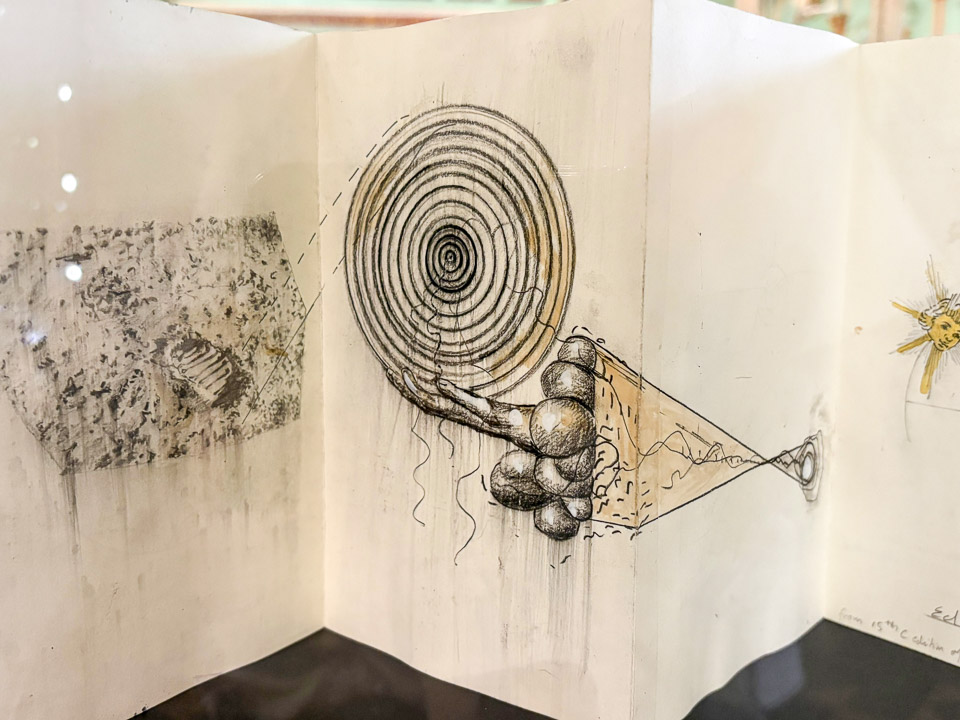
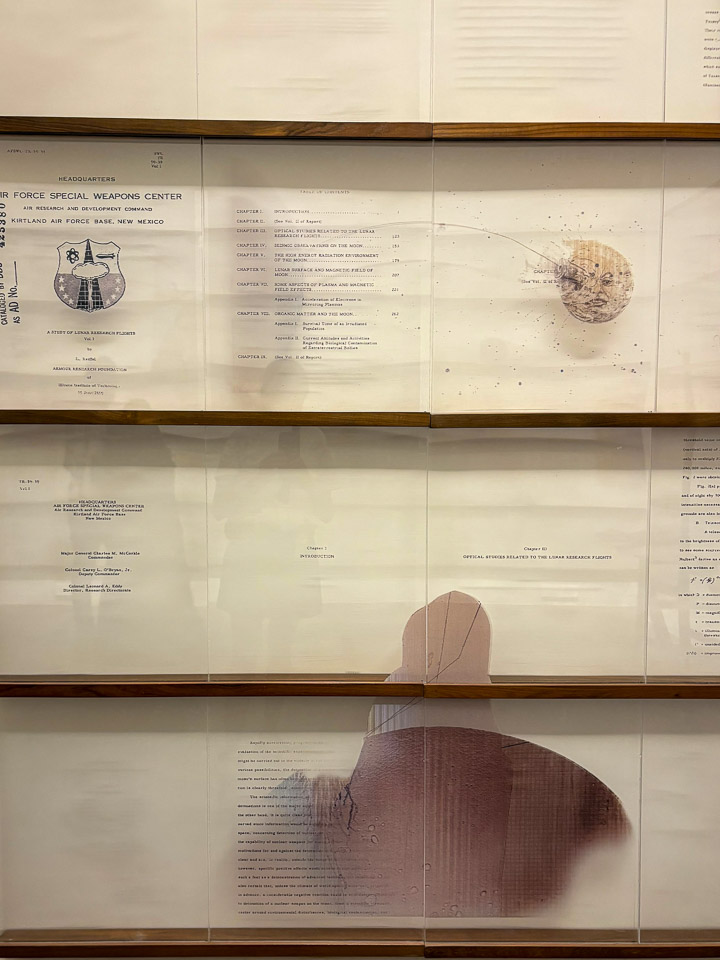
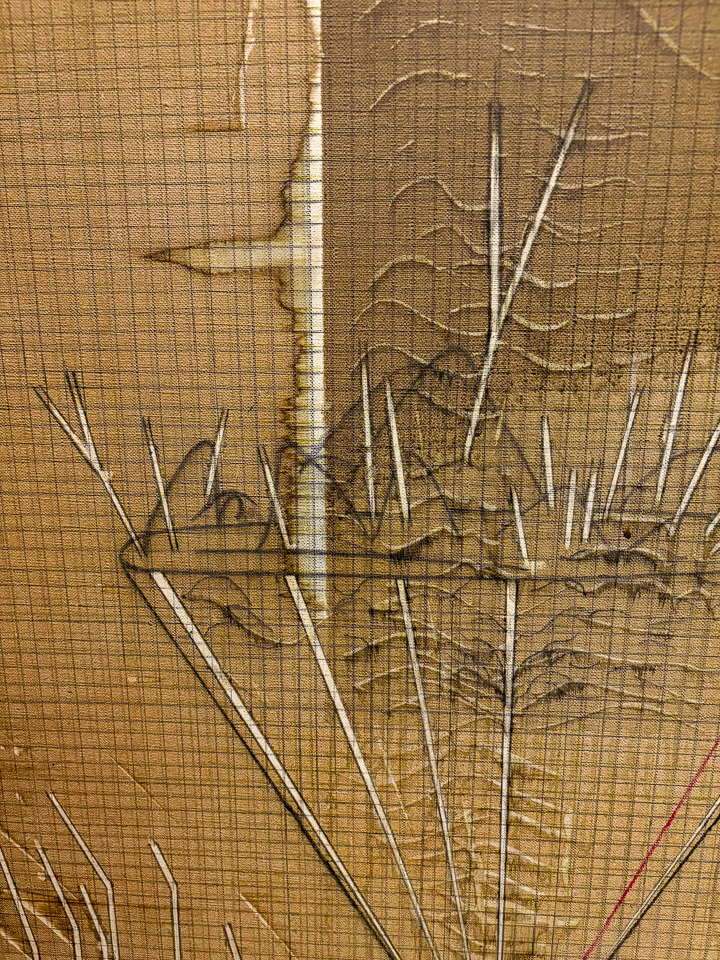
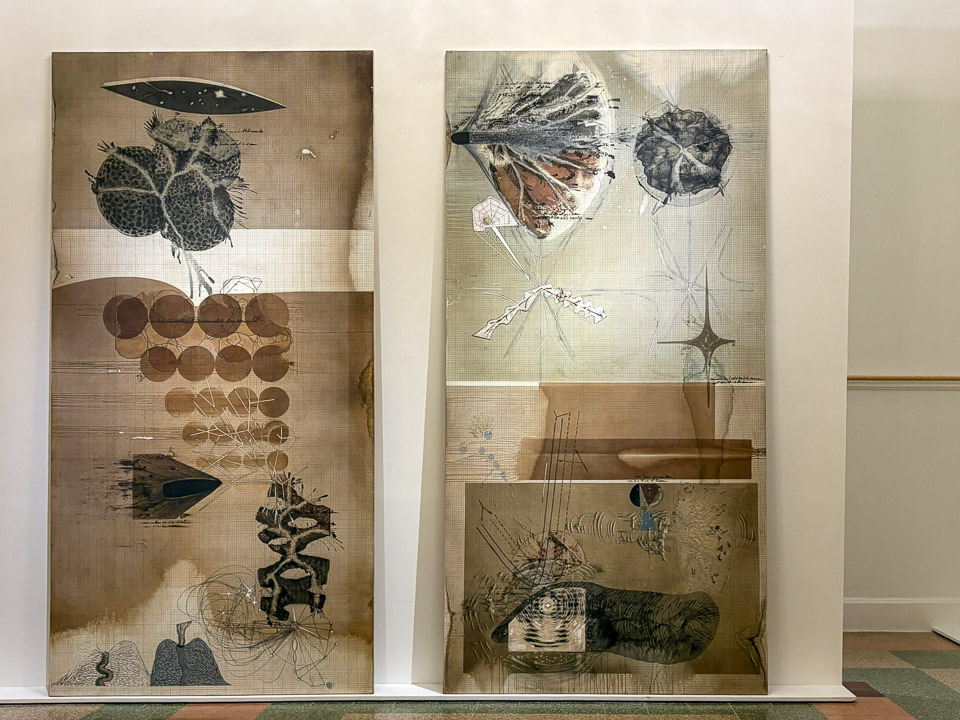
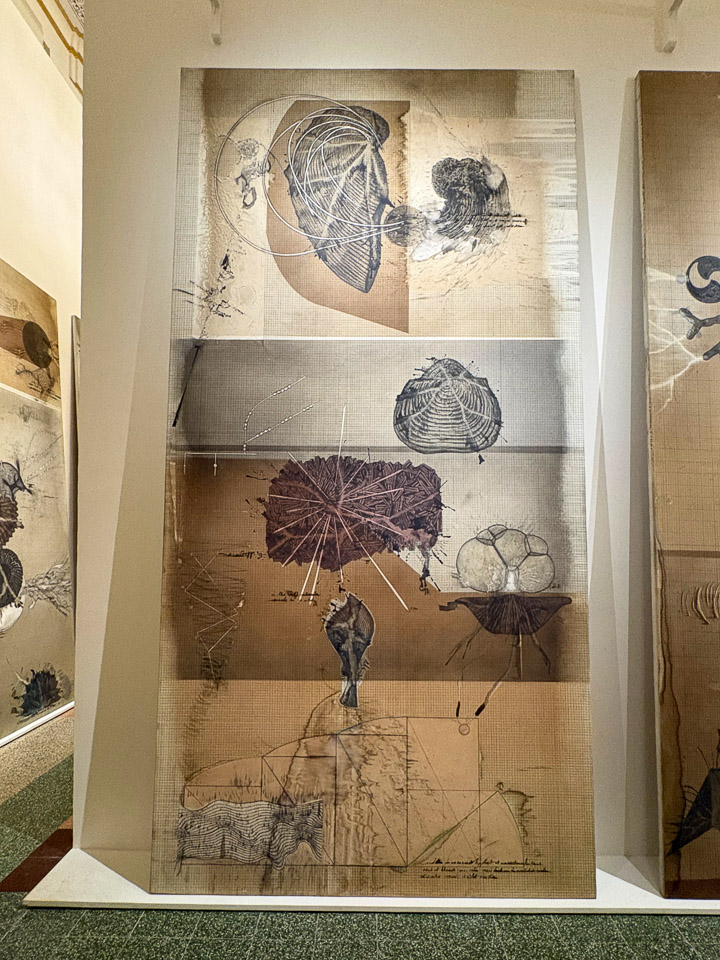
The ten part suite of monumental paintings that gives the exhibition its title is particularly striking. Drawing from Project A119, a once classified American military proposal from the 1950s to detonate a nuclear device on the Moon, Kallat brings together ballistic trajectories, blast like formations, botanical, geological, suboceanic and celestial forms. Science, political history and speculation occupy the same pictorial space. The paintings make us consider the extraordinary lengths to which human ambition can travel, and the fragility of the world we inhabit.
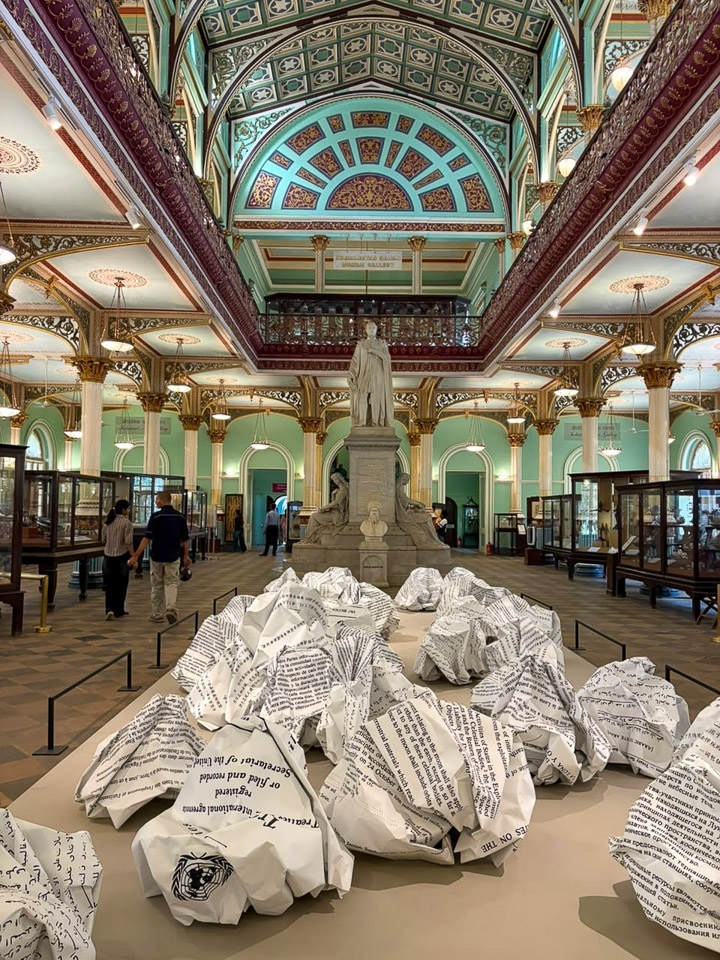
Then there is Moon Treaty, comprising 54 sculptural forms derived from the 1979 United Nations Agreement Governing the Activities of States on the Moon and Other Celestial Bodies. Resembling sheets of the treaty crumpled into planetary forms, these sculptures occupy the museum’s central hall. There is a certain irony in the work. An international agreement intended to place the Moon beyond national appropriation and military use is transformed into fragile, crumpled objects. The idea is both simple and profound. The scale of the installation gives it presence, while the concept carries a quiet sensitivity.
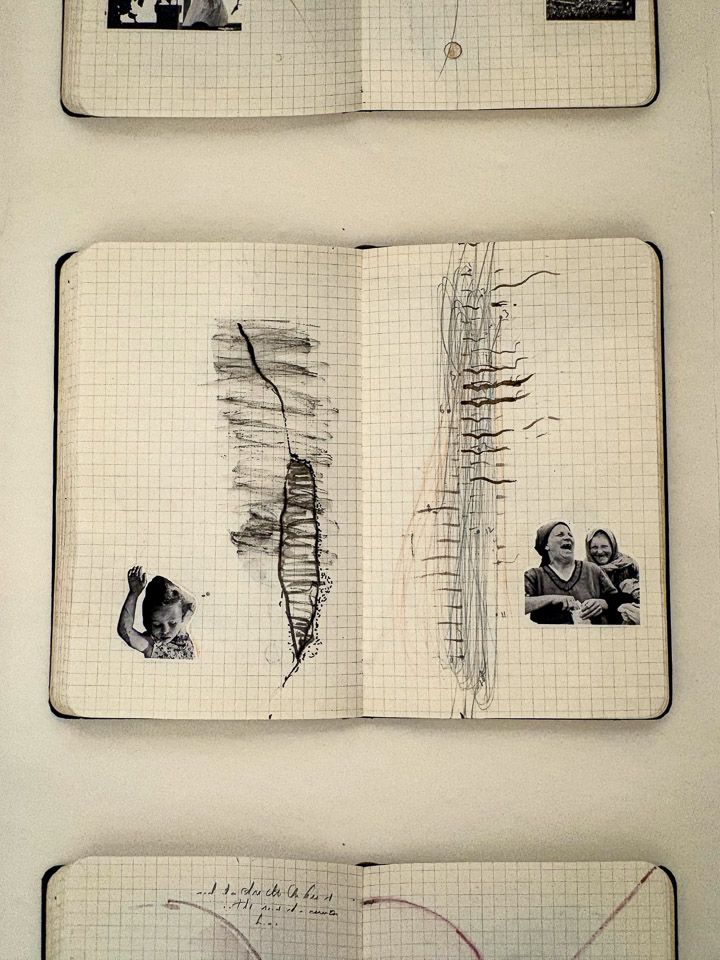
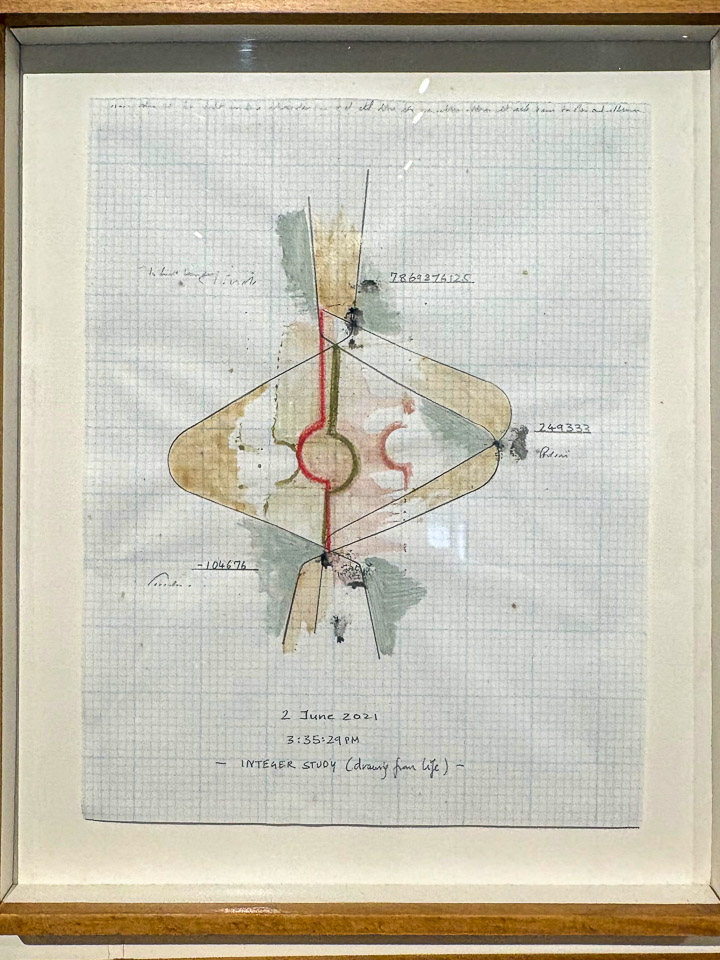
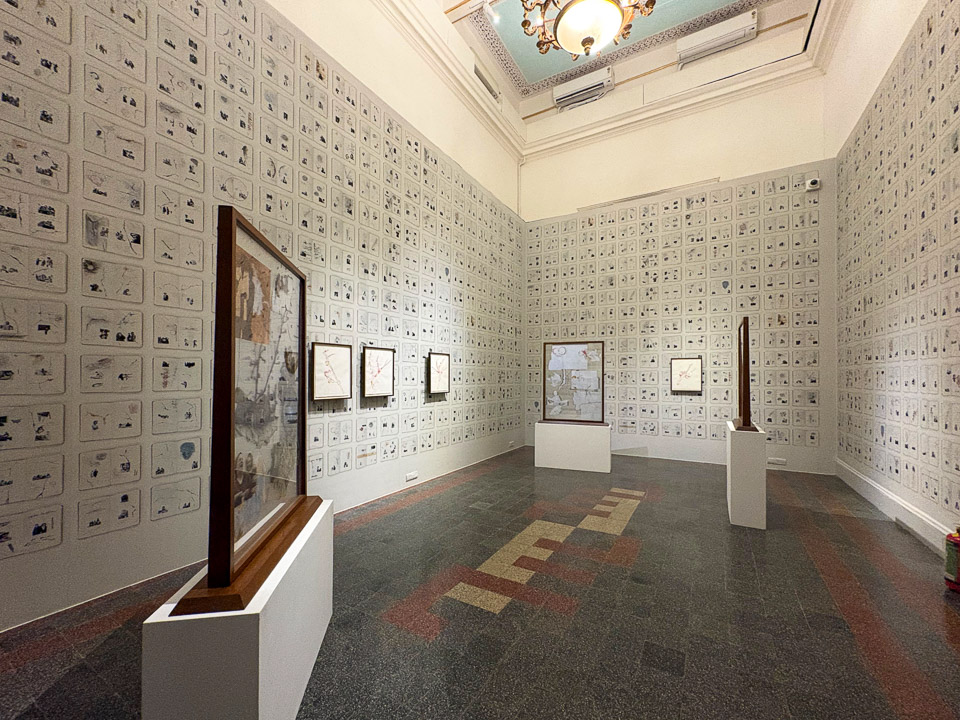
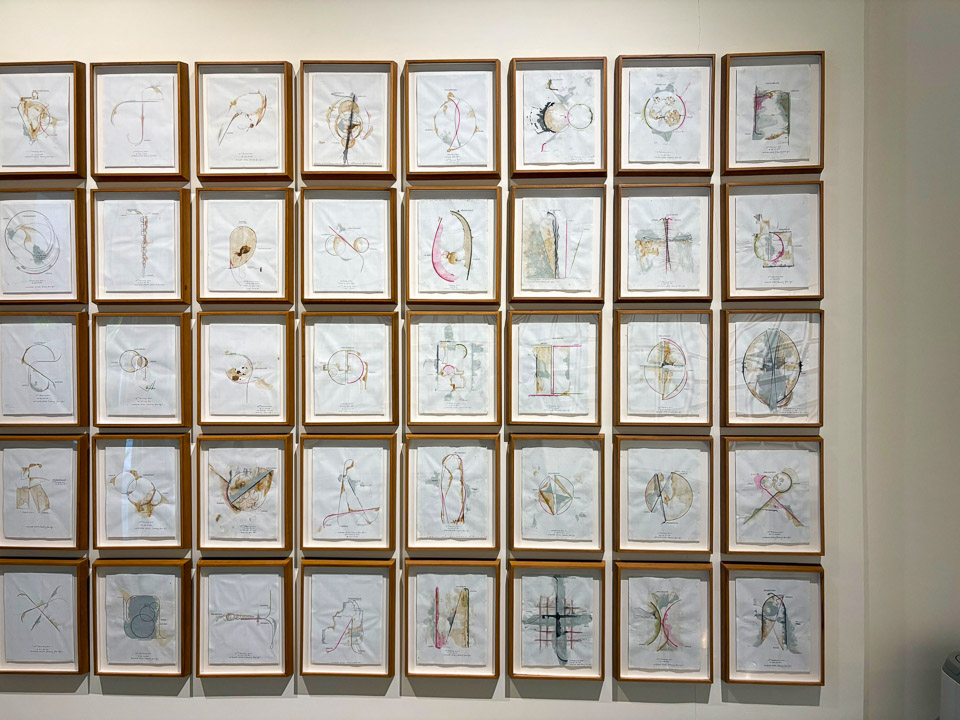
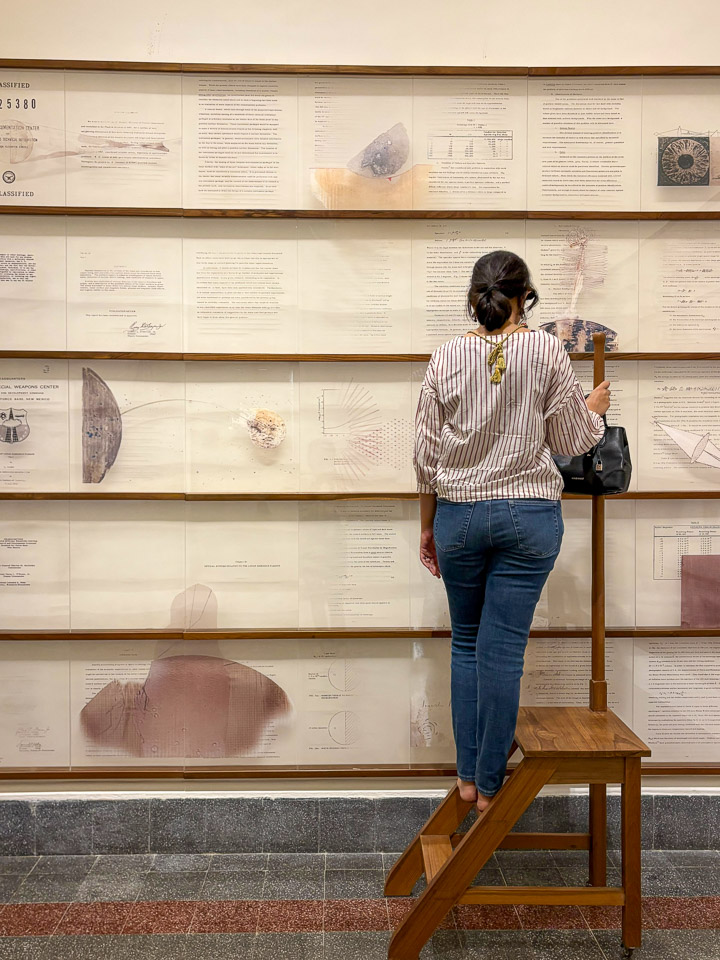
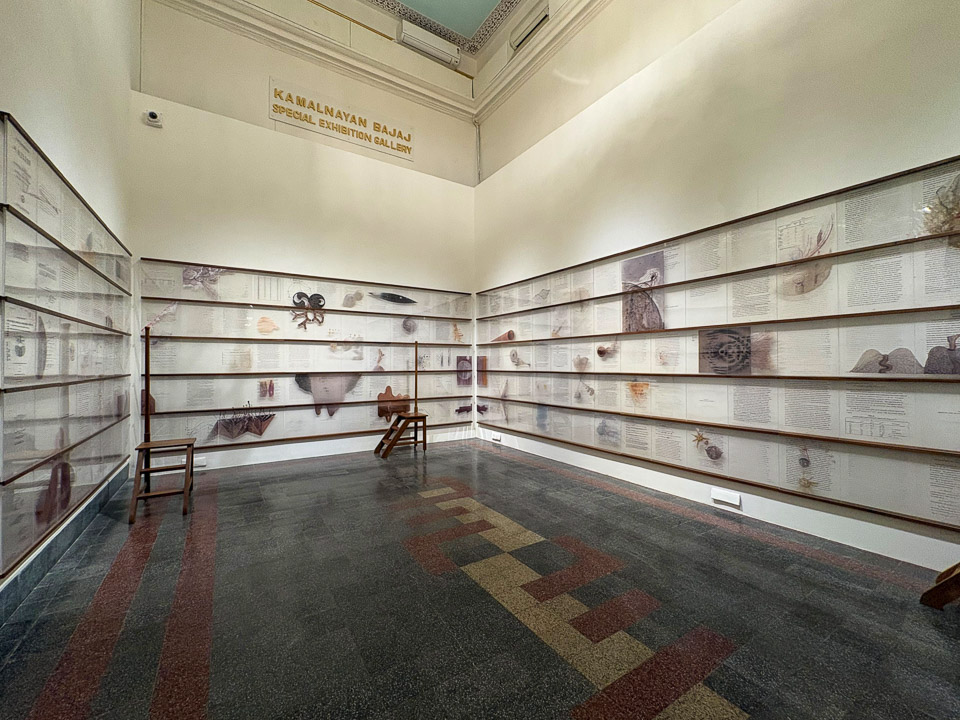
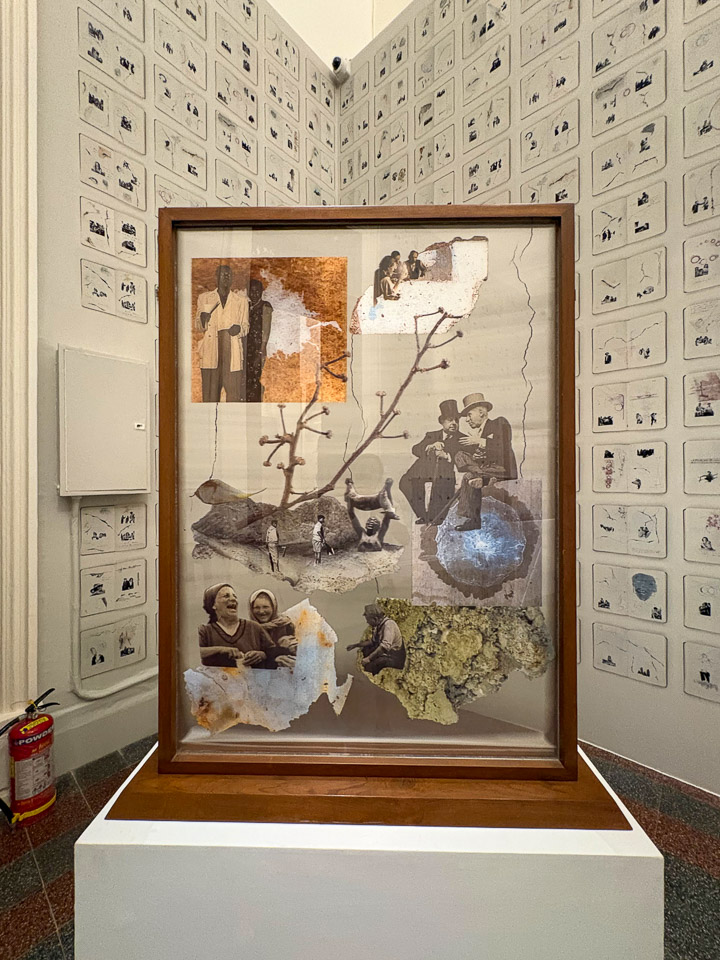
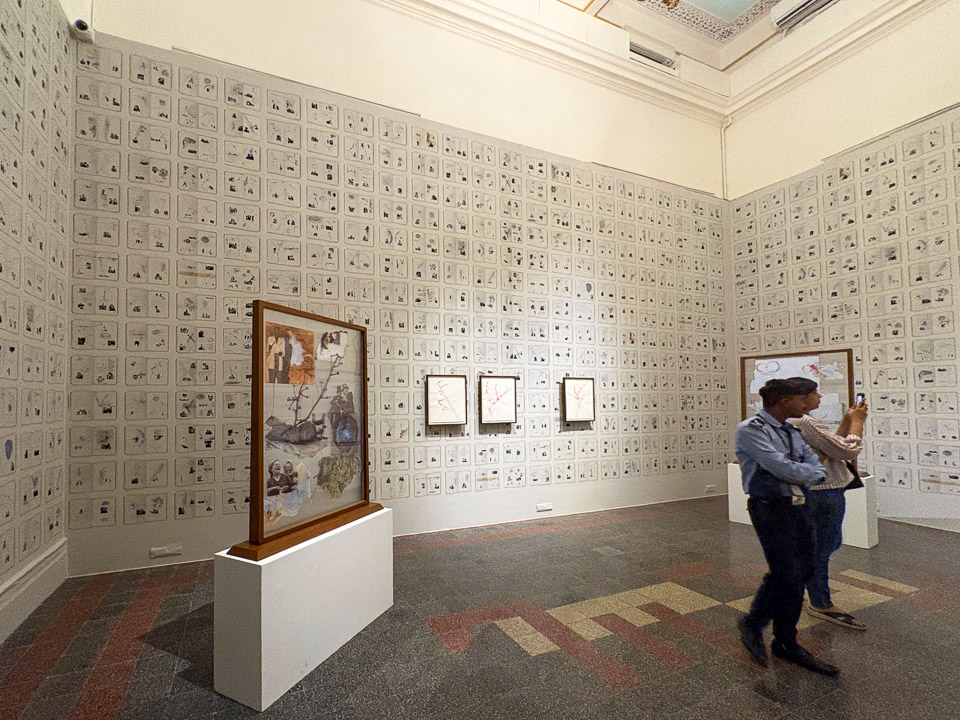
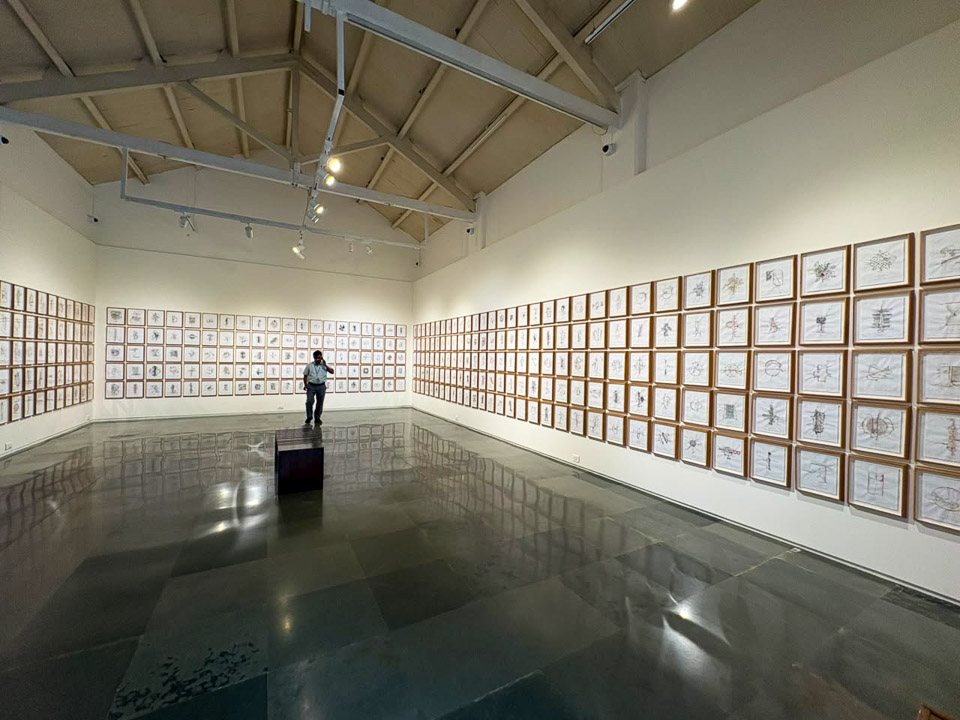
One of the most extraordinary presentations is Integer Study (drawing from life), where all 365 original drawings made during 2021 are brought together for the first time. One drawing every day for an entire year. Each begins with three algorithmically estimated numbers, the global human population at a particular moment, and the number of births and deaths recorded up to that point in the day. What could have remained a statistical exercise becomes a meditation on life, time and mortality. The commitment to such a process is remarkable in itself. To sustain an enquiry for 365 days and then bring the entire body of work together gives us a sense of time passing, of lives beginning and ending, and of our place within a much larger human story.
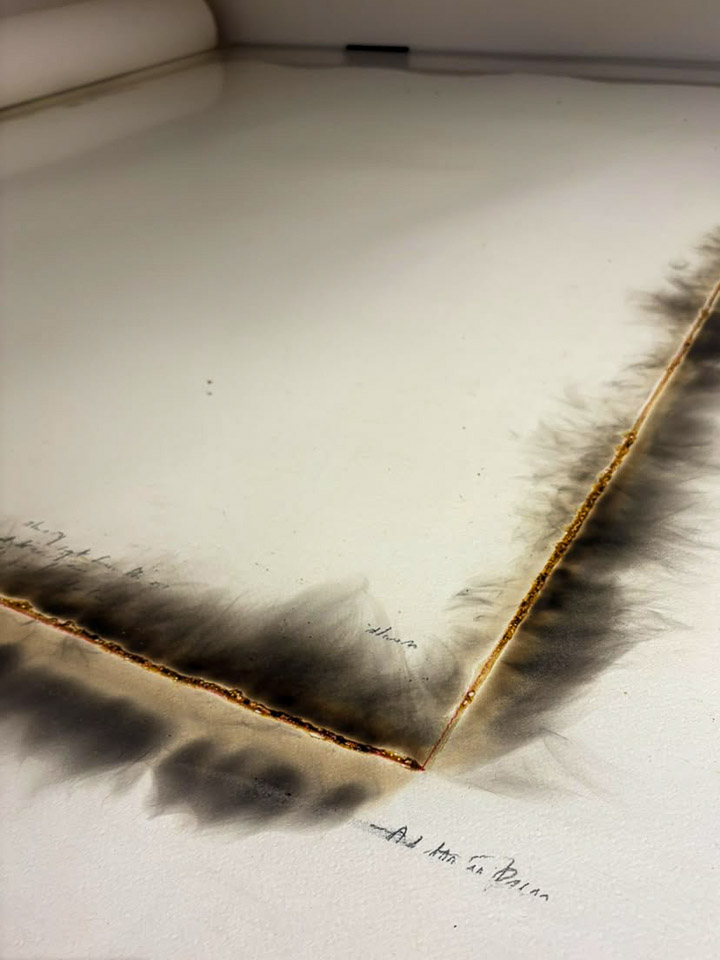
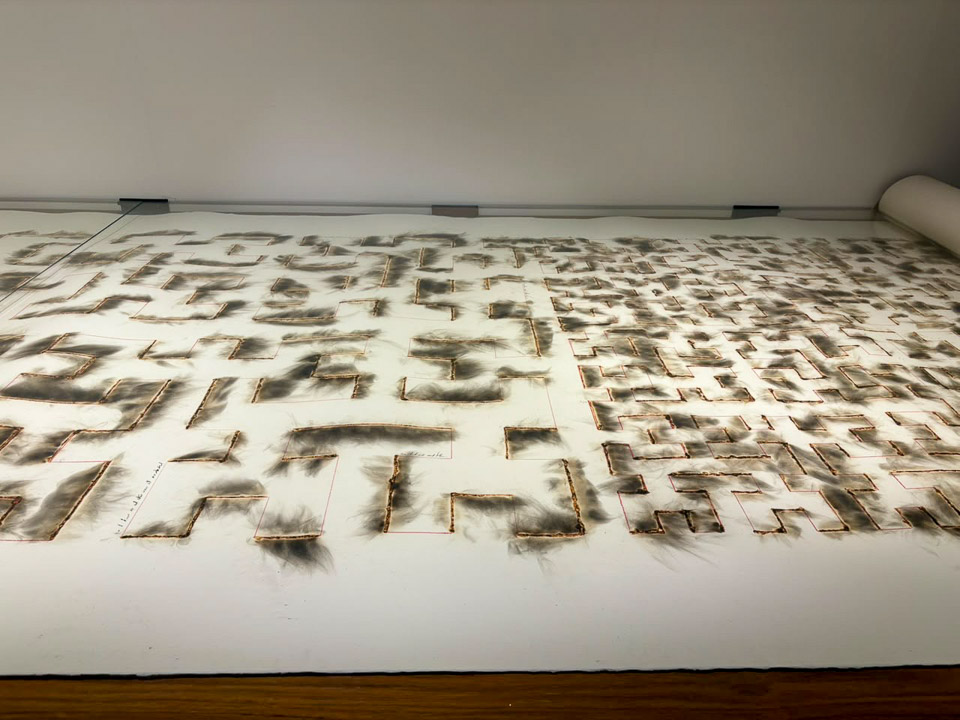
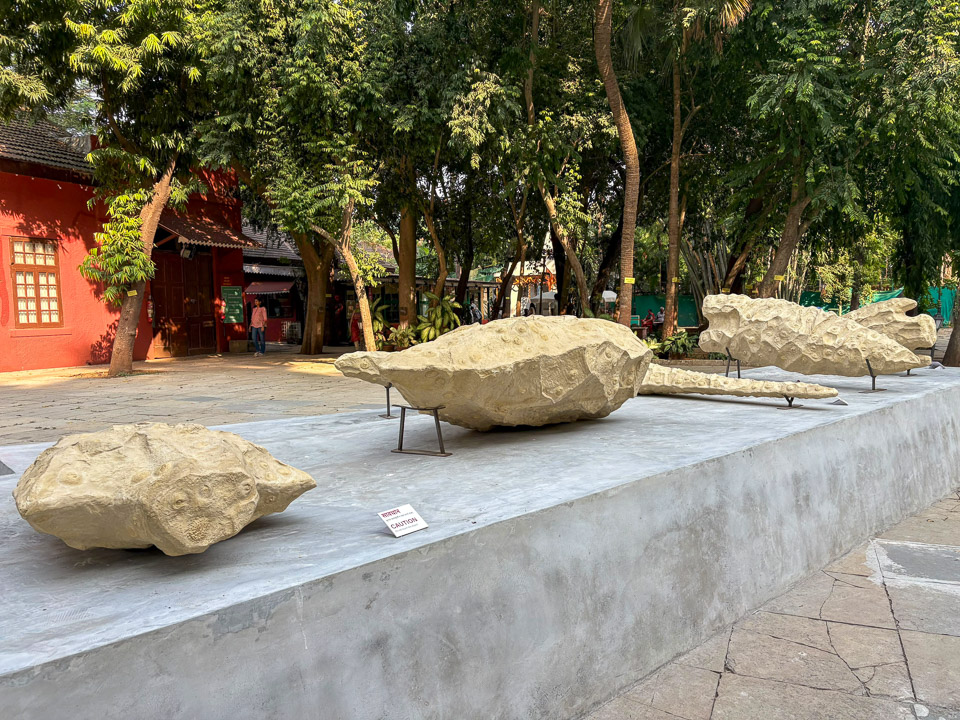
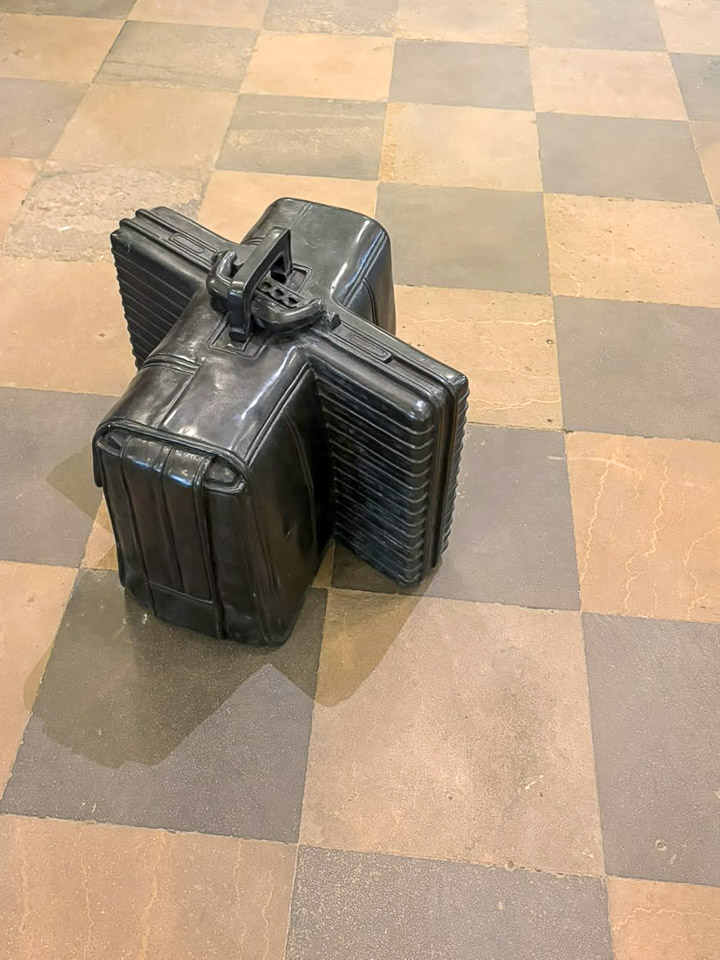
The exhibition extends these enquiries through works such as Lunar Redux, Epicycles and Wind Study (Hilbert Curve), alongside new bronze sculptures. In the museum plaza, Untitled (Two Minutes to Midnight) brings together enlarged forms derived from prehistoric stone tools with a reference to the Doomsday Clock. The work draws a connection between humanity’s earliest technologies and its capacity for self destruction. It is a sobering reminder of how far we have travelled and how much remains unresolved.
What I find particularly compelling is the sensitivity with which Kallat approaches these subjects. The ideas could easily become overwhelming, even inaccessible. Instead, he finds ways to make us pause and look again. Behind the scientific references and historical events are questions about human existence, our need to measure and understand the world, our desire to control it, and our place in a universe that remains largely beyond our comprehension.
There is also the audacity of attempting something like this. To conceive an exhibition of such magnitude, to bring together so many bodies of work, to sustain the research and then reimagine the presentation within the architecture of a historic museum is an enormous undertaking. I often think we underestimate what goes into making exhibitions of this nature. We see the finished presentation, the works in their intended spaces and the conversations they generate. We rarely think about the years of thought, the research, the revisions, the logistics and the sheer persistence required to bring such an idea to life. There is a tremendous amount of intellectual and physical labour behind this exhibition.
There is a difference between making large works and thinking on a large scale. Kallat does both. The physical presence of the works is matched by the ambition of the ideas. The number of works never feels like an exercise in accumulation. Each has a reason to be there, each adds another layer to the enquiry, and the whole becomes considerably larger than the sum of its parts.
I had the opportunity to meet Jitish at Art Mumbai, where I congratulated him on the exhibition. What struck me was his humility and politeness. He suggested that I visit the show on a weekday morning, explaining that weekends would be crowded. It was a small exchange, but one that stayed with me. There was a genuine consideration for the visitor’s experience and, in a simple way, an understanding that people’s time matters. I found that quite telling.
There is another aspect of the exhibition that deserves recognition. The effort to make it accessible to people across different sections of society. All the exhibition texts are also available in Marathi. This allows a much wider audience to engage with the ideas and the works in a language they are comfortable with. It is a meaningful decision, particularly in the context of a public museum. We speak frequently about making art accessible, but the effort has to go beyond the rhetoric. Language is an important part of that effort. An exhibition of considerable intellectual depth and ambition has been presented with an awareness of the people who might walk through its doors. I appreciate that enormously.
For me, this is what makes Conjectures on a Paper Sky such a compelling exhibition. It is a reminder that art can still be an exercise in extraordinary ambition, patience and conviction. That an artist can take on subjects as vast as the cosmos, scientific discovery and human history, and approach them with both intellectual rigour and emotional sensitivity.
I have always admired Jitish’s ability to think beyond the immediate boundaries of an artwork. With this exhibition, he has taken that instinct to another level. It is an undertaking that demands a great deal of its maker, and equally, a great deal of its audience.
Some exhibitions impress you with individual works. Some stay with you because of the questions they raise. This one does both. What stays with me most, though, is the audacity of imagining something of this scale and having the conviction to bring it into being. And perhaps just as importantly, the thoughtfulness with which it has been made available to its audience.
That, in itself, is quite an achievement.