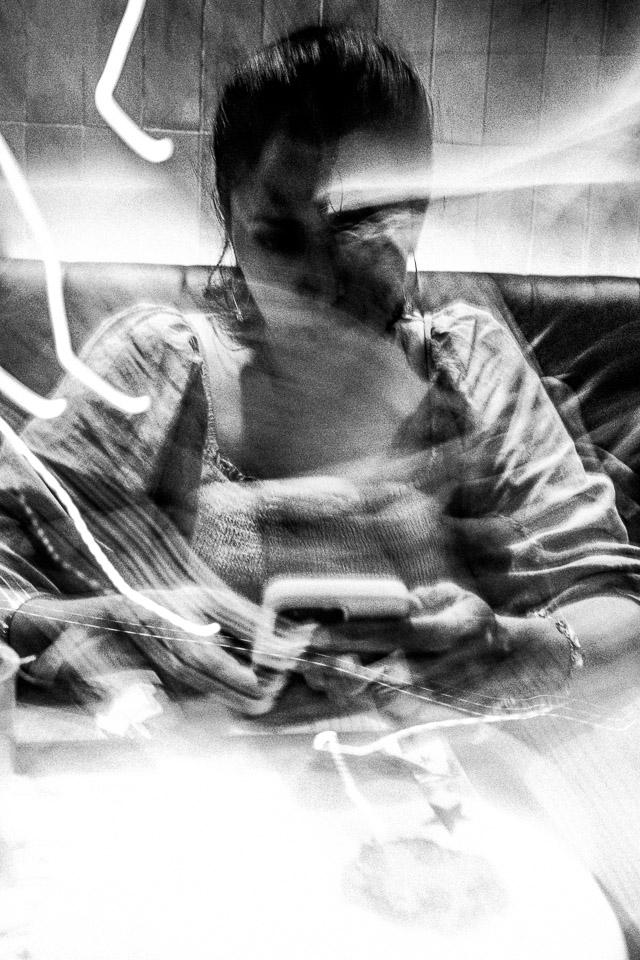
The studio is quieter than expected. Large wooden surfaces lean against the walls carrying scratches, fractures, sanded edges, layers that appear excavated rather than built. Dust settles slowly across the floor. Afternoon light enters from one side of the room and remains there for hours. Nothing feels rushed.
While speaking, Rubkirat Vohra pauses often before answering. Certain questions seem to travel through memory before arriving in language.
1
Your work feels deeply connected to architecture, but also to emotion. Which came first for you, structure or feeling?
Feeling. Always feeling. Even as a child, I reacted emotionally to spaces before understanding why. I remember old houses, fading walls, silent corridors, light entering a room at a certain hour. Those things stayed with me deeply. I think spaces absorb human
experience. They hold grief, memory, prayer. Architecture came later as a language through which I could process emotions that otherwise
felt too large or too personal to explain directly. But I have never been interested in architecture formally. I am interested in emotional residue. What remains after people leave. What remains after time passes. A wall can carry loneliness. A doorway can carry longing.
2
You return repeatedly to the Mehrab form. What keeps pulling you back to it?
The Mehrab feels spiritual to me even when I am not consciously thinking about religion while working. It feels like a threshold emotionally. A passage between inner and outer worlds. Between restlessness and surrender. There is also something unresolved inside me that keeps returning to it. Maybe a search for peace. Maybe freedom. Emotionally my mind is always moving. The Mehrab creates a psychological space where I can breathe again. Faith is deeply important in my life. During difficult phases, faith carried me forward when very little else made sense. That undercurrent remains inside the work even when the work becomes abstract.
3
Your surfaces feel less constructed and more excavated.
Completely excavated.
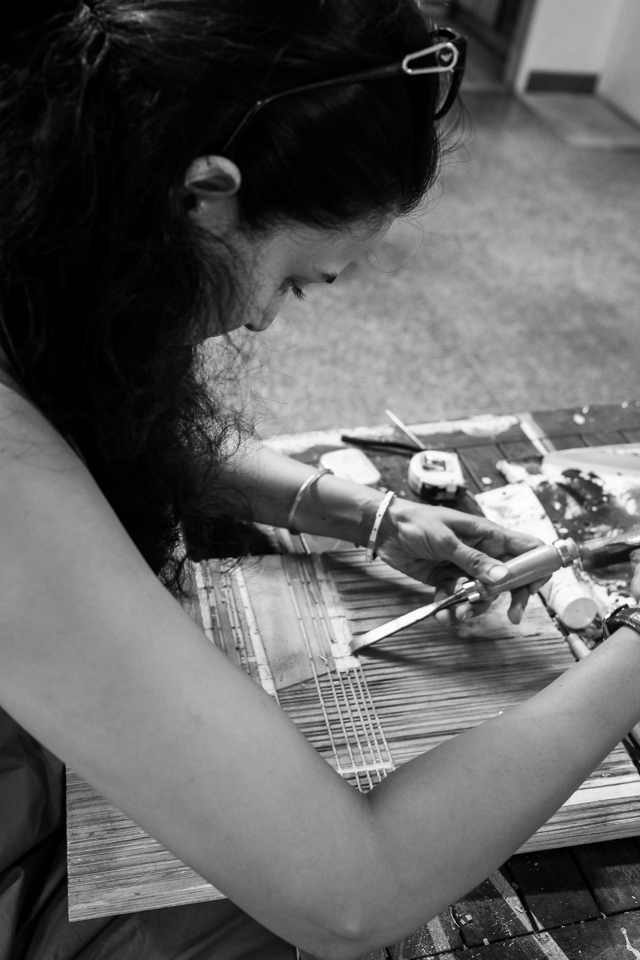
I spend more time removing than adding. Scraping, sanding, damaging, rebuilding.Sometimes I feel the work already exists underneath and my process is about uncovering it slowly. I cannot work with polished surfaces. I need friction. I need evidence that something has survived. Emotionally also I connect to erosion deeply. Life changes people gradually. Loss changes
people. Waiting changes people. Even strength leaves marks. I want the work to carry that physically. Sometimes old weathered walls feel more honest to me than newly painted ones.
A long pause follows this answer. Vohra runs her hand lightly across the edge of an unfinished wooden panel before continuing.
4
Wood has become central to your practice. What does it allow that canvas never could?
Wood feels alive to me in a way canvas never did. Canvas can sometimes feel passive. Wood resists you. It cracks. It bends differently. It reacts to pressure, climate, handling. It refuses total control and I enjoy that relationship very much. I think emotionally I also resist control. I have always been headstrong. If I believe in something deeply, I pursue it fully even when the path becomes uncomfortable. Working with wood feels similar. It demands patience and respect. There is warmth in it. A physical presence. The imperfections become important. The cracks become important. I do not want sterile perfection in my work. I want humanity.
5
Your recent works feel quieter. Has maturity made you calmer or simply better at hiding turbulence?
Maybe both. Earlier there was a lot of internal noise inside me. Ambition, uncertainty, emotional turbulence, all existing together. I still carry ambition strongly. I want the work to grow internationally. I want it to reach people deeply. That hunger remains. But somewhere over time I realised achievement and inner peace are completely different things.
I think the quieter quality in the work emerged when I stopped trying to force intensity onto every surface. Earlier I was afraid of emptiness inside the work. I wanted to keep pushing,
filling, searching. Now I trust restraint more.
Maybe maturity teaches you that strength does not always need to announce itself loudly.
6
A lot of abstraction today feels emotionally over explained or decorative. Your work carries restraint. How do you stop before overworking a piece?
Through failure honestly. I have destroyed many works by trying too hard. Sometimes the ego keeps interfering because you become emotionally attached to the process. You convince yourself the work still needs more when actually it is already complete. Over time I realised the strongest moments are often fragile ones. If you continue too long,the work loses breath. Earlier I would push surfaces until they became exhausted. Now I stop
earlier. Pain already exists naturally inside my work. I do not need to perform intensity artificially.
7
Do you trust intuition completely, or has intuition also misled you?
Intuition leads almost everything for me, but intuition can also mislead you emotionally. There are moments where instinct becomes confusion and you have to step away from the work completely. Usually the process begins with a feeling that refuses to leave me alone. Restlessness. Longing. Emotional confusion itself sometimes. I carry those states into the studio and begin
responding physically to the material. If something feels false internally, I cannot continue with it even if it appears visually successful.
8
Your work often carries stillness. Is that something you search for outside the studio as well?
Very much.
I think contemporary life has become emotionally exhausting. People are constantly reacting, consuming, explaining themselves. I need moments where the noise stops completely. Prayer gives me grounding. Faith gives me steadiness during uncertain phases. Sometimes I sit with a work for long periods before touching anything because I need clarity first. The studio often becomes an inward space for me.
9
Has art helped you understand yourself better or simply helped you survive yourself?
Probably both.
Art gave me a space where I could exist honestly without constantly explaining myself.Outside the studio life demands responsibility and performance all the time. Inside the studio. I can confront uncertainty quietly.
There were phases where only faith and work kept me emotionally steady. Even now I still feel like I am searching for something emotionally and artistically that I have not fully reached yet. Maybe that search itself keeps the work alive.
10
When you begin a work, do you begin with an image, memory, material, or mood?
Usually a mood. Something emotional that stays unresolved for days or weeks. I rarely begin with a fixed image because I do not want to imprison the work too early. My emotional state enters the material before I consciously recognise it. The way I scrape a surface, the colours I reject, the areas I leave empty, all of that comes from somewhere internal. Sometimes memories surface unexpectedly during the process. Childhood atmospheres. Family spaces. Certain silences from the past.
11
Your surfaces often feel wounded. Is fragility important to you?
Very important.
I do not trust perfection emotionally. Perfect surfaces feel distant to me. Controlled.
Untouched. Real life is never like that.
Fragility is where humanity becomes visible. Every person carries invisible cracks. The work allows vulnerability and strength to exist together. I want the surfaces to feel scarred but still standing.
There is dignity in survival.
12
What kind of work makes you suspicious today?
Work that feels emotionally pre decided.
Sometimes you stand before a work and immediately sense that every gesture already knows how it wants to be received. The politics are correct. The surface is resolved. The references are current. But emotionally nothing is at stake. I think viewers can sense honesty instinctively. Even imperfect work can feel alive if it
comes from genuine searching.
13
Has living in urban spaces shaped your visual language?
Deeply.
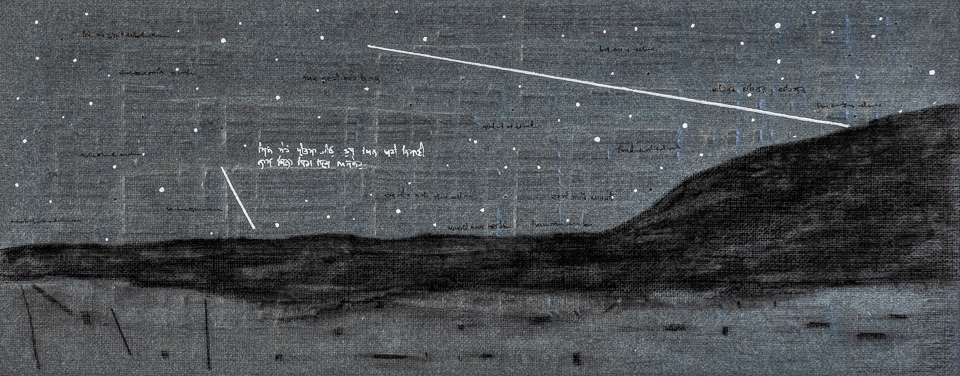
Cities affect me psychologically. Noise, movement, construction, emotional fatigue. People surrounded by others but still isolated. I absorb urban surfaces intensely. Crumbling walls, electric wires, unfinished structures, fading paint. But I think my work is also resisting that speed. It is searching for slowness inside chaos.
14
Do you think younger artists today become visible before they become internally ready?
Yes. Everything moves too quickly now. Visibility arrives very early. Social media, fairs, pressure to remain relevant constantly. Artists begin developing publicly before they have had enough solitude with themselves.
That can become dangerous creatively because the artist slowly becomes aware of audience all the time. Work begins shaping itself around reception and recognisability. Meaningful work needs uncertainty. Some works require long periods of invisibility before they can exist honestly.
15
Art fairs and exhibitions bring visibility. Studios remain private worlds. Which space feels more truthful?
The studio completely.
Exhibitions show resolved work. The studio shows the actual person. The uncertainty, failures, unfinished thoughts. The studio contains the emotional truth behind the practice. There are days where nothing works and you still have to continue. That relationship with yourself is far more honest than visibility.
16
Do you think success slowly trains artists toward repetition?
It can.
Success can quietly make artists fearful. People begin expecting a certain kind of work and repetition starts feeling safer. I fight that internally. I would rather struggle honestly than become emotionally repetitive. Once the work loses curiosity and risk, something important disappears creatively.
17
What scares you more, repetition or failure?
Repetition.
Failure still carries possibility. It means you attempted something honestly. Repetition feels emotionally dead. Once the work loses curiosity and risk, it loses life. I never want comfort to make the work predictable.
18
What has been the hardest part of your journey so far?
Balancing inner life and outer life.
I love my family deeply and I carry emotional responsibility strongly. At the same time I have an intense drive to grow as an artist. Those worlds can pull you in different directions emotionally. There were periods of self doubt where I questioned everything. The work, the path, myself. People see exhibitions and achievements. They rarely see the emotional struggle underneath them.
19
What changed internally for greater clarity to emerge in your practice?
I stopped trying to satisfy external expectations constantly.
Earlier there was pressure to explain the work intellectually or fit certain trends. Over time I realised clarity only comes when you become honest with yourself first.
Faith also changed me. I became calmer internally. Less desperate for immediate answers.
20
At what point do you know a work is finished?
When it becomes emotionally quiet.
Sometimes during the process the work keeps demanding more from me. More tension, more searching. Then suddenly something settles. The work stops asking questions. If I continue after that point, I usually damage the piece.
21
What are you searching for right now that you still have not reached?
Freedom. Emotional freedom. Inner peace. I want the work to become simpler but deeper. That is much harder than complexity. To say something truthful with very little. To create stillness without emptiness. At the same time I still carry ambition strongly. So there is always tension between striving and surrender.
22
If someone encounters your work ten years from now, what do you hope remains beyond trend or context?
Sincerity. Emotional truth. Humanity.Even during difficult phases of life, I have always believed there is light somewhere beyond struggle. Faith taught me that. If someone stands before the work years later and feels less alone emotionally, even briefly, I think the work has succeeded.