Begin with the walls of Shekhawati. Walk through Jhunjhunu or Sikar and the old havelis still carry their painted skins into the light. Pigments ground from earth and stone. Elephants and horses, deities and processions, flowering vines and small birds, all laid onto plaster by hands that trusted the wall to keep them. Time has settled into these surfaces. The colour has sunk into the lime. The pattern endures.
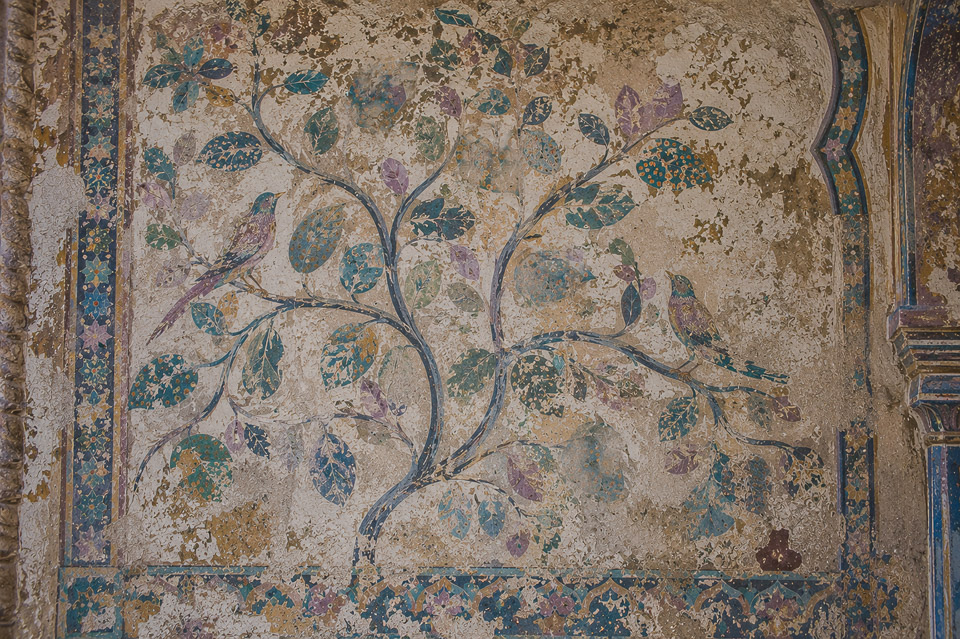
Harpreet Narula grew up inside this inheritance. Rajasthan, Punjab, Haryana. The old havelis and kothis of Punjab carry a kindred memory, their walls textured by weather and by the touch of many years. This is the world that taught him how a surface speaks. Before any theory, before the language of galleries, he had these walls. They were his first teachers. Every painting remembers them.
Narula came to art through textile and garment design, and this training runs underneath everything he makes. The loom teaches a particular logic. Warp and weft. Pattern built one row at a time. Cloth arrives through repetition, thread following thread until the whole appears. He carries this knowledge into paint. His canvases feel woven. Each mark sits beside the last like a thread finding its place. Surface becomes structure. Pattern becomes its architecture.
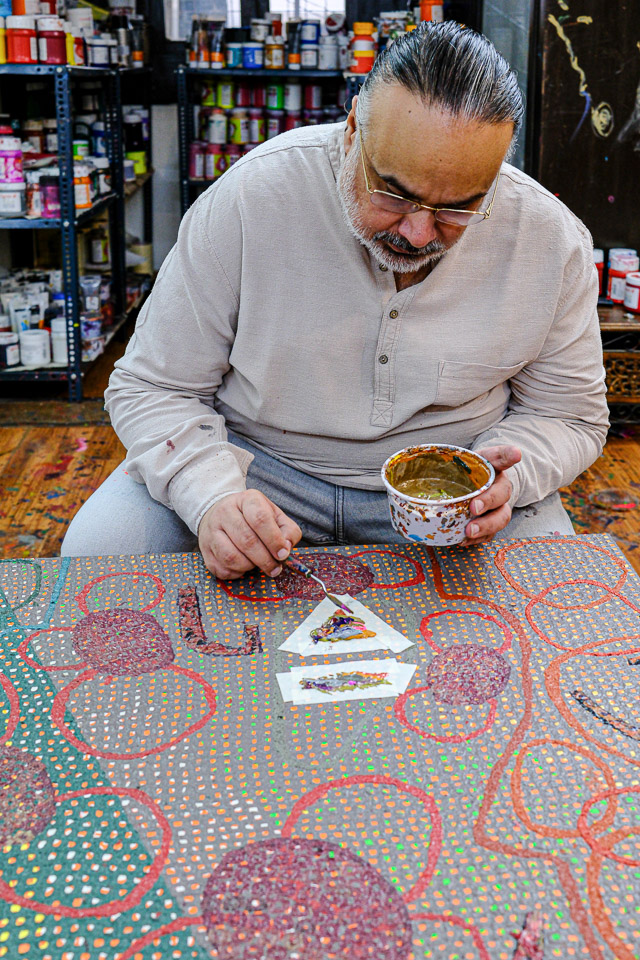
People often ask why art occupies so much of his time. His answer is disarmingly simple. I was always meant to be an artist. It gives me happiness and peace of mind. That quiet conviction runs through every painting. Every mark carries it. Every surface reflects it.
The rhythm of repetition recalls practices found across Sufi and Sikh traditions. The repeated zikr. The steady return to the same words until thought quietens and attention settles. The same patience appears in Narula’s paintings. He repeats a form the way one keeps a practice, daily, steadily, as naturally as breathing. His paintings gather through quiet accumulation. They ask the eye to slow and the mind to stay.
Narula paints memory through rhythm. Years of looking at painted walls return as colour, texture and structure. Familiar forms dissolve into abstraction while carrying the weight of their origins. The paintings hold the feeling of a place. Memory becomes colour, texture and rhythm.
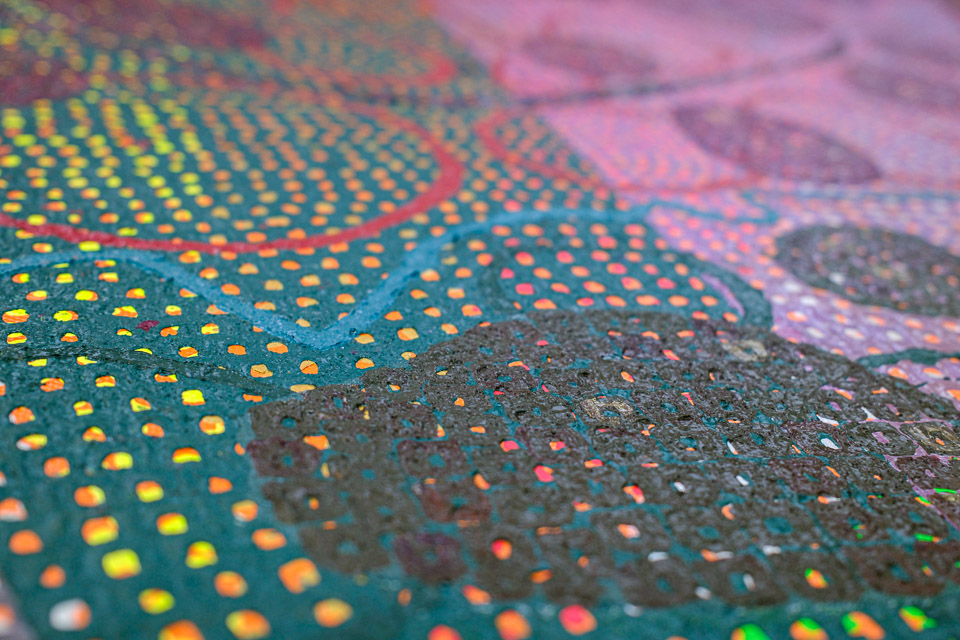
Three inheritances meet in his work. The painted wall of his childhood. The woven cloth of his training. The patient act of repetition. All three grow from the same belief. Meaning gathers through steady return. Mark by mark. Thread by thread. Coat by coat. His frescoes of memory, his textile logic and his meditative repetition speak the same language of patience.
He roots his abstraction in a specific soil, in walls that stand in real towns, in a craft passed through real hands.
I think this carries real importance, and I will say why plainly. Much contemporary abstraction speaks an international language stripped of its accent. It could have been made almost anywhere. Narula roots his abstraction in a specific soil, in walls that stand in real towns, in a craft passed through real hands. This rootedness gives his work a rare density. It carries the weight of place and memory, qualities that collectors and institutions increasingly seek.
There is a second reason this matters. The fresco tradition of Shekhawati fades on the walls a little more each year, and the old havelis of Punjab hold their painted rooms in silence. Narula gives these surfaces a second life. He carries the vernacular wall into the contemporary frame and honours craft as fine art. This is a meaningful contribution to contemporary Indian painting.
These paintings carry their origins with them. Every canvas remembers the wall, the loom and the hand. That is where their strength lies. As interest grows in artists whose work remains rooted while speaking across cultures, Narula’s paintings travel with the confidence of knowing exactly where they began.
The old walls of Rajasthan and Punjab were never meant to last forever. Weather will claim them. Neglect already has. Narula understands that. His paintings are what remain after memory has done its work. The plaster will disappear. The language will remain.
Written to accompany Inward, Harpreet Narula’s first solo exhibition at Art Explore, New Delhi, August 2026.