Issue 10 is being published on an ongoing basis, with new content added regularly.
Status: In Progress
-
The Long Way to Clay
Some artists arrive with a plan. Vipul Kumar did not. Chance brought clay into his life. Resolve made him stay. Over a decade of conversations, studio visits and shared meals, I have come to understand that the sculptures are only part of the story. The man behind them is equally compelling. This essay is not…
-
What the Walls Hold
Harpreet Narula turns the painted walls of Shekhawati and Punjab, the logic of the loom, and the patience of repetition into an abstraction rooted in place. On the eve of his first solo exhibition, a case for why this work matters and where it goes.
-
The Long Way to Clay
Some artists arrive with a plan. Vipul Kumar did not. Chance brought clay into his life. Resolve made him stay. Over a decade of conversations, studio visits and shared meals, I have come to understand that the sculptures are only part of the story. The man behind them is equally compelling. This essay is not about ceramics alone. It is about honesty, labour, time and an artist who has quietly spent a lifetime listening to the earth.
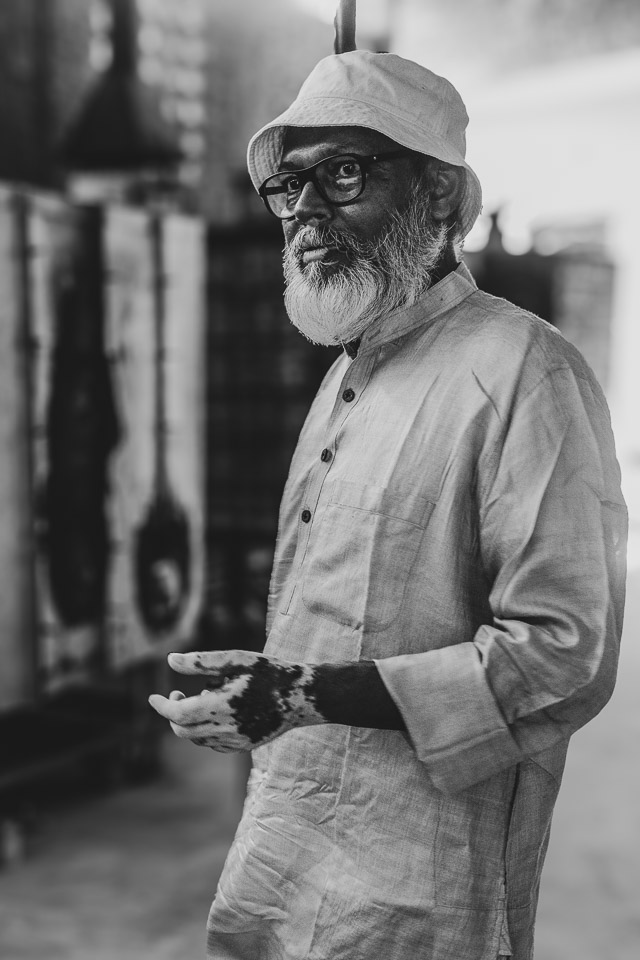
Some artists spend years constructing a mythology around themselves.
Vipul Kumar has never been interested in that.
If anything, he has a habit of dismantling it.
I remember asking him once about a body of work that reminded me of shifting volcanic landscapes. The surfaces carried the energy of molten earth, fractured rock and geological movement. I expected a long answer, perhaps a reference to history, philosophy or years of research.
Instead, he smiled and spoke about a news report he had watched on television.
A volcano in Iceland had erupted.
As the images unfolded, he realised he had already been making sculptures that carried the same visual language.
Most artists would never admit that. They would build a more elaborate story. Vipul simply told me what happened.
That is the man I have come to know over the last decade.
He has very little interest in appearing more complicated than he really is. Ironically, that is exactly what makes him interesting.
I first met Vipul ji, as almost everyone calls him, around ten years ago. He was installing a porcelain sculpture in a group exhibition. What I remember is not the sculpture. I remember the floppy cap, his complete concentration and someone adjusting the lights until they felt right. He looked up, smiled, shook my hand and went back to work. It lasted less than a minute.
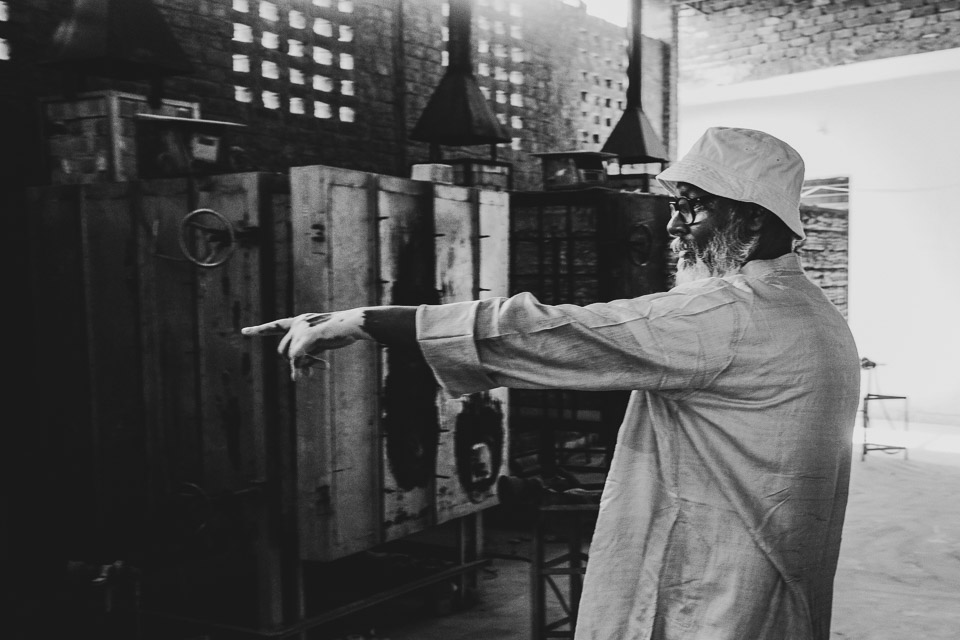
Neither of us knew that we had just begun a conversation that would continue for years.
A few years later he approached me about presenting his work at the India Art Fair. That was where our relationship really began. Since then there have been exhibitions, long studio visits, disagreements, difficult conversations and endless cups of tea. One conversation has remained with me more than any other.
We were sitting in his studio when he suddenly looked at me and said, “Aap humein apne hisaab se kaam karne dijiye.”
I smiled.
“Theek hai.”
That was the conversation.
It lasted barely a minute.
I have thought about it many times since.
He wasn’t asking for freedom. He was reminding me what the relationship between an artist and a gallery should be. A gallery questions. It challenges. It occasionally disagrees. The final decision belongs to the artist because it is the artist who has to live with the work long after everyone else has gone home.
Years later he told me another story.
This one explained the man.
He wanted to study at Banaras Hindu University. There was barely a day left to report when his village was flooded. The roads had disappeared beneath water. Most people would have accepted defeat and waited for another opportunity.
Vipul started walking.
He walked through flooded roads until he reached a small town. He crossed the Ganges in an overcrowded boat, risking his life simply to reach the other side. Somehow he made it to Patna, boarded a train and finally arrived in Varanasi.
He narrated the story as though it were completely ordinary.
It wasn’t.
We sat there for a while without saying much. I kept thinking about that young man walking through floodwater because he had already decided where he belonged.
Looking back, I don’t think he was simply travelling towards a university.
He was travelling towards the rest of his life.
That determination never left him.
It appears in every sculpture he makes.
There is another irony.
Vipul never planned to become a ceramic artist.
Ceramics entered his life almost by chance. He received encouraging feedback when he showed his work in Delhi. One exhibition became another. The material slowly became his language.
Chance opened the door.
Commitment kept him there.
I have often thought about that. We like to imagine artists making grand decisions that shape their lives forever. Real life is rarely so orderly. A conversation, a city, an unexpected opportunity or a material changes direction. What matters is not the accident. What matters is the decision to stay.
Vipul stayed.
His studio tells the rest of the story.
Classical music is almost always playing. The room is warm, sometimes unbearably so. Clay sits beside stone. Finished sculptures stand next to works waiting for the kiln. Dust settles on every surface. To someone visiting for the first time, the place appears chaotic.
It isn’t.
It is simply honest.
Nothing has been arranged for visitors. Nothing has been staged for photographs. The room carries only one message.
Work is happening.
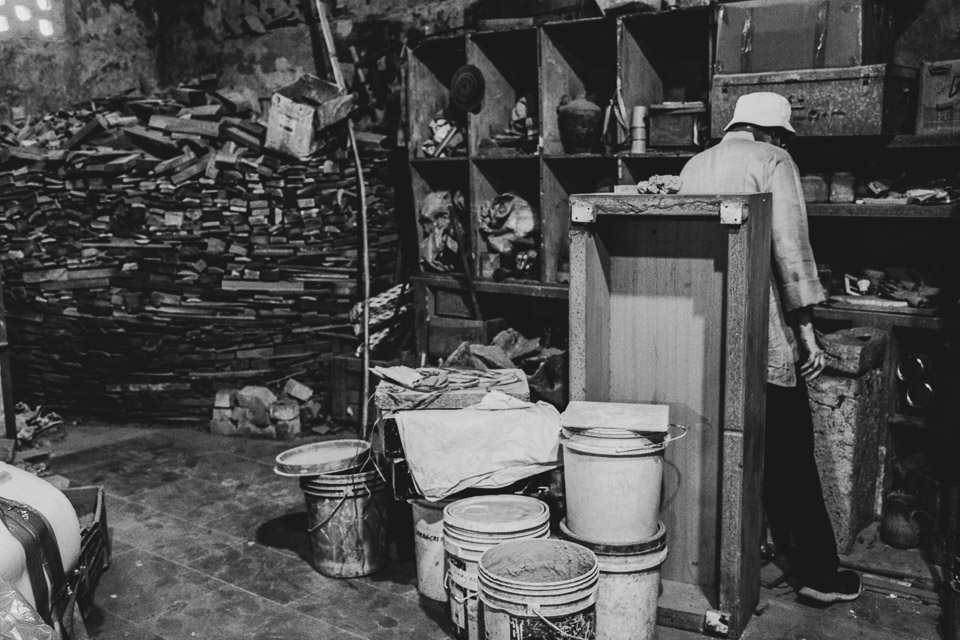
He can spend hours there without noticing time. Sculpture is not what he does. It is the only way he knows how to live. I have never met him wondering what he should do next. The answer is always the same.
He goes back to the studio.
No visit ends without food.
He insists.
He has a genuine affection for good food and enjoys sharing it. Conversation stretches across meals. He wears khadi almost instinctively. If he travels, he usually returns with a small gift. There is a generosity about him that asks for nothing in return.
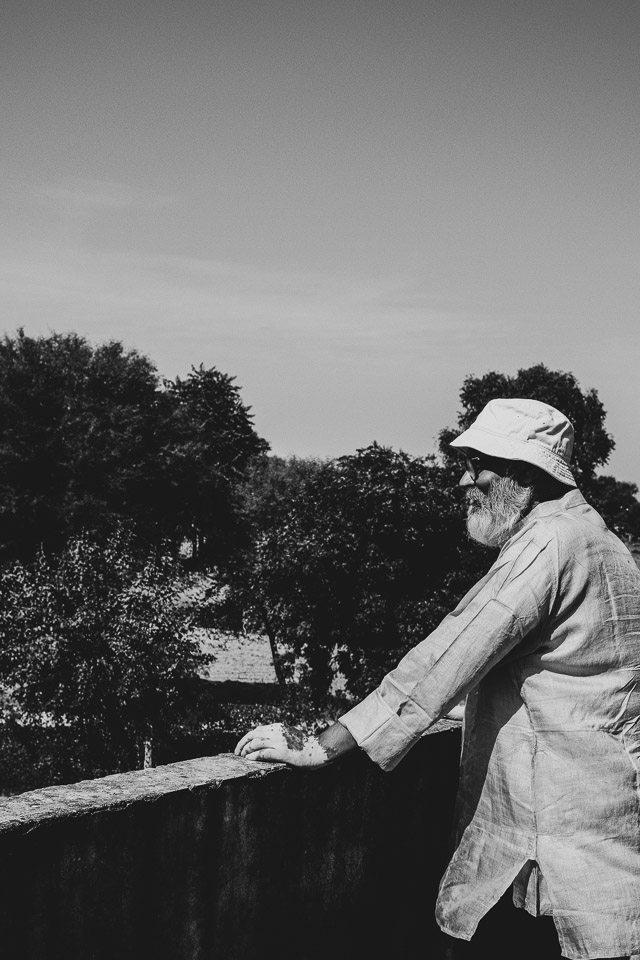
People sometimes describe him as blunt.
I understand why.
He says exactly what he means.
Spend enough time with him and another person slowly appears. Thoughtful. Quiet. Sensitive. There is a solitude around him that I have often noticed. Perhaps I am wrong in calling it loneliness. Solitude is probably the better word. Whatever it is, he has learnt to inhabit it comfortably.
Good sculpture asks for that.
Once, during a conversation, he held my hand and laughed.
“Your hands are very soft.”
Then he looked at his own.
We both laughed.
He has spent his life carving stone and shaping clay.
I have spent mine holding cameras, pens and now a keyboard.
Our hands had travelled completely different paths before meeting in the same world.
That small moment has stayed with me because it reminded me that sculpture is never only an idea.
It leaves marks on the body before it leaves marks on the material.
Vipul trained as a stone carver before clay became his primary material.
Stone never left him.
Even today he approaches clay with the patience of someone who understands resistance. Every unnecessary gesture weakens the work. Every thoughtful gesture strengthens it. His sculptures possess the quiet authority of carved stone while retaining the sensitivity that only ceramics can offer.
His greatest achievement, in my opinion, is not technical.
It is emotional.
His sculptures are tactile without trying to be tactile.
You instinctively want to reach out, not because the surface demands attention, but because it feels inevitable. There is no performance. No attempt to impress. The texture grows out of the process itself.
The highest level of skill is often invisible.
When people speak about Varanasi they often remember the ghats.
Vipul remembers something else.
He remembers Kabir Hostel. Students arguing late into the night. Visits to Sarnath. Conversations around Gandhi, socialism and Buddhist thought.
When I once asked him about these influences, he replied with a sentence I have never forgotten.
“I am not translating what others have said. I have something to say on my own.”
That sentence explains his work better than any critical essay.
Kabir’s respect for labour, Gandhi’s belief in restraint, the Buddhist acceptance of impermanence and the Hindu understanding that rivers, mountains and stones possess a living presence all sit quietly beneath these sculptures. They are influences. They are not conclusions.
His conclusions belong to him.
Another sentence has stayed with me.
“The environment is what I am interested in.”
He wasn’t speaking about environmental activism.
He was speaking about relationship.
Clay is not a symbol of the earth.
Clay is the earth.
Before it reaches the studio it has already travelled through rain, rivers, minerals and geological time. Earth gives it form. Water gives it life. Air prepares it. Fire transforms it. The artist joins a conversation that began millions of years before him.
Standing before his sculptures, I rarely think about ceramics.
I think about weathered cliffs after the monsoon.
Riverbeds.
Seeds waiting beneath dry soil.
Fragments of forgotten architecture.
Walk around the work and it changes.
A mountain becomes a body.
A shell becomes a shrine.
A geological formation becomes something almost human.
Painting has always received more attention than ceramics.
I have never accepted that hierarchy.
Paintings preserve moments.
Clay preserves civilisations.
Archaeologists reconstruct cultures through fired earth. A broken vessel can reveal trade, migration, ritual and everyday life. Clay remembers what history forgets.
Perhaps that is why Vipul Kumar’s work feels so convincing.
The work is believable because the man is believable.
In an art world that often rewards performance, he has quietly chosen honesty.
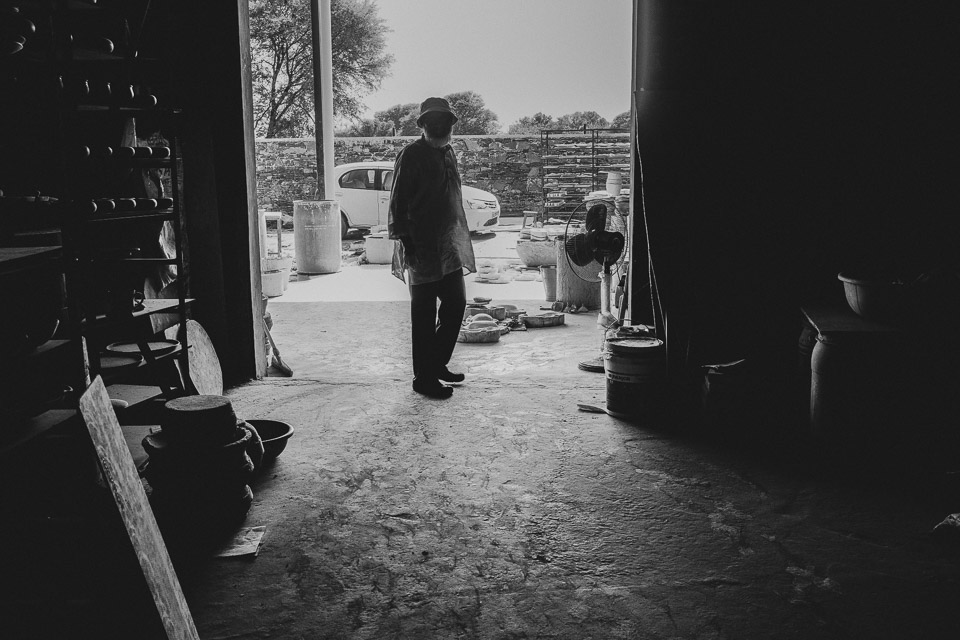
Every time I leave his studio, the music is still playing.
Some sculpture is drying.
Another waits for the kiln.
Tea has gone cold.
The conversation remains unfinished.
I suspect it always will.
Chance may have brought clay into his life.
Resolve transformed it into a lifetime.
Written to accompany Vipul Kumar’s solo exhibition at Bikaner House, New Delhi, September 2026
-
What the Walls Hold
Harpreet Narula turns the painted walls of Shekhawati and Punjab, the logic of the loom, and the patience of repetition into an abstraction rooted in place. On the eve of his first solo exhibition, a case for why this work matters and where it goes.
Begin with the walls of Shekhawati. Walk through Jhunjhunu or Sikar and the old havelis still carry their painted skins into the light. Pigments ground from earth and stone. Elephants and horses, deities and processions, flowering vines and small birds, all laid onto plaster by hands that trusted the wall to keep them. Time has settled into these surfaces. The colour has sunk into the lime. The pattern endures.
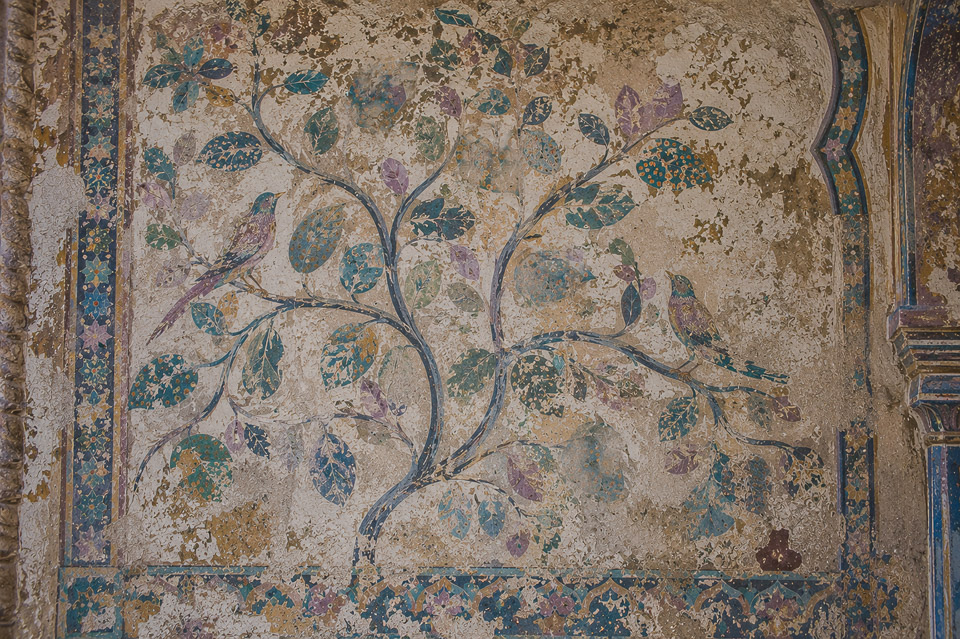
Fresco Harpreet Narula grew up inside this inheritance. Rajasthan, Punjab, Haryana. The old havelis and kothis of Punjab carry a kindred memory, their walls textured by weather and by the touch of many years. This is the world that taught him how a surface speaks. Before any theory, before the language of galleries, he had these walls. They were his first teachers. Every painting remembers them.
Narula came to art through textile and garment design, and this training runs underneath everything he makes. The loom teaches a particular logic. Warp and weft. Pattern built one row at a time. Cloth arrives through repetition, thread following thread until the whole appears. He carries this knowledge into paint. His canvases feel woven. Each mark sits beside the last like a thread finding its place. Surface becomes structure. Pattern becomes its architecture.
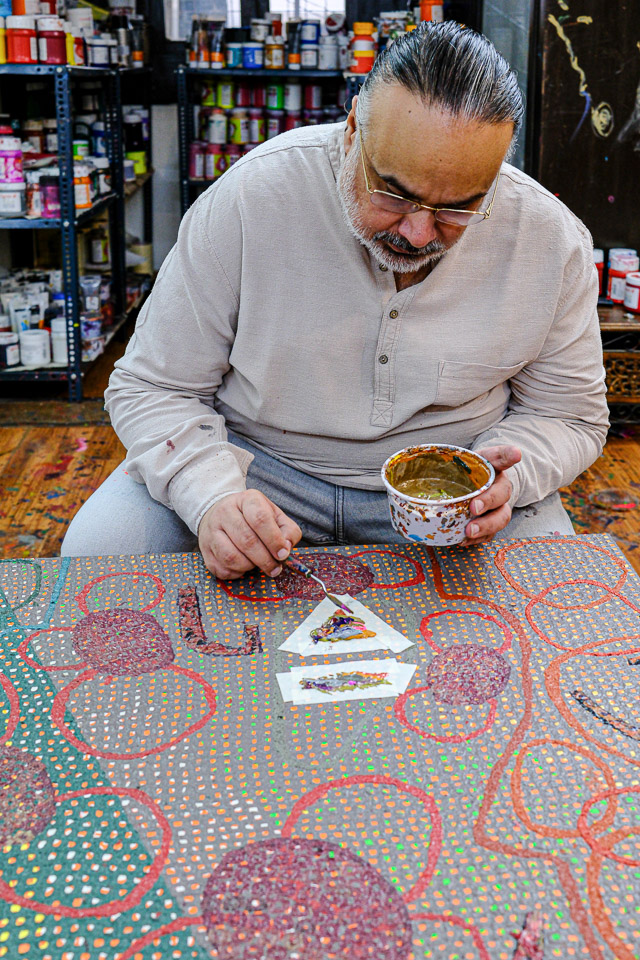
Harpreet in his studio People often ask why art occupies so much of his time. His answer is disarmingly simple. I was always meant to be an artist. It gives me happiness and peace of mind. That quiet conviction runs through every painting. Every mark carries it. Every surface reflects it.
The rhythm of repetition recalls practices found across Sufi and Sikh traditions. The repeated zikr. The steady return to the same words until thought quietens and attention settles. The same patience appears in Narula’s paintings. He repeats a form the way one keeps a practice, daily, steadily, as naturally as breathing. His paintings gather through quiet accumulation. They ask the eye to slow and the mind to stay.
Narula paints memory through rhythm. Years of looking at painted walls return as colour, texture and structure. Familiar forms dissolve into abstraction while carrying the weight of their origins. The paintings hold the feeling of a place. Memory becomes colour, texture and rhythm.
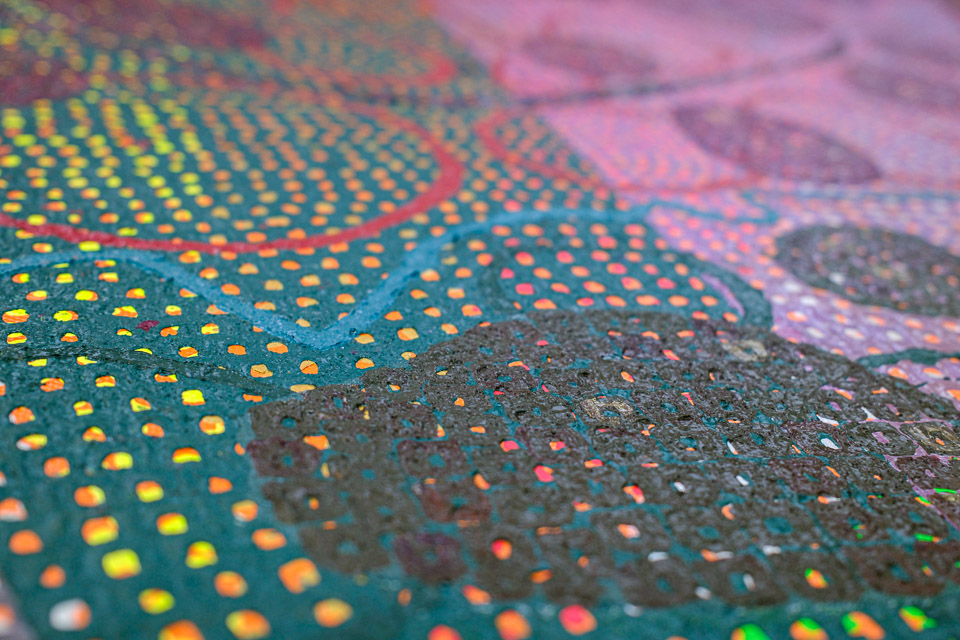
Textures and repeat patterns Three inheritances meet in his work. The painted wall of his childhood. The woven cloth of his training. The patient act of repetition. All three grow from the same belief. Meaning gathers through steady return. Mark by mark. Thread by thread. Coat by coat. His frescoes of memory, his textile logic and his meditative repetition speak the same language of patience.
He roots his abstraction in a specific soil, in walls that stand in real towns, in a craft passed through real hands.
I think this carries real importance, and I will say why plainly. Much contemporary abstraction speaks an international language stripped of its accent. It could have been made almost anywhere. Narula roots his abstraction in a specific soil, in walls that stand in real towns, in a craft passed through real hands. This rootedness gives his work a rare density. It carries the weight of place and memory, qualities that collectors and institutions increasingly seek.
There is a second reason this matters. The fresco tradition of Shekhawati fades on the walls a little more each year, and the old havelis of Punjab hold their painted rooms in silence. Narula gives these surfaces a second life. He carries the vernacular wall into the contemporary frame and honours craft as fine art. This is a meaningful contribution to contemporary Indian painting.
These paintings carry their origins with them. Every canvas remembers the wall, the loom and the hand. That is where their strength lies. As interest grows in artists whose work remains rooted while speaking across cultures, Narula’s paintings travel with the confidence of knowing exactly where they began.
The old walls of Rajasthan and Punjab were never meant to last forever. Weather will claim them. Neglect already has. Narula understands that. His paintings are what remain after memory has done its work. The plaster will disappear. The language will remain.
Written to accompany Inward, Harpreet Narula’s first solo exhibition at Art Explore, New Delhi, August 2026.